Tag: trust

  • You Can’t Control Your Horse – But You Can Influence

    You Can’t Control Your Horse – But You Can Influence

    [fusebox_track_player url=”https://dts.podtrac.com/redirect.mp3/pdcn.co/e/traffic.libsyn.com/dailystridespodcast/1392-You_Cant_Control_Your_Horse_But_You_Can_Influence.mp3″ title=”You Can’t Control Your Horse – But You Can Influence…” ]

    You pick up trot and feel your horse getting a little quick. You can feel a speed wobble coming! So you shorten the reins, maybe squeeze a tad more, hold a little, fix a little, manage a little more… And before you know it, you’re trying to control every second of the ride. Sound familiar? If so, you’re not alone! And, as you probaly know, it’s usually a good feeling to help someone…

    As riders, the temptation is very real to be consistent when helping your horse. But what if all of your help is actually hindering your horse’s training and progress?

    And what would happen if you began to take a step back and see your ‘help’ for what it really is – a need for absolute control!  But, you see, control – when it comes to horses in training and being ridden – is a pipe dream! It is not possible because your horse has a mind of its own, with thoughts that produce emotions and feelings of its own. So, how about we begin calling out this need for absolute control in a way that will actually help you and your horse…

    Instead of micro-managing every little nuance, what if you trusted your horse enough to begin allowing them to take responsibility for their role in your work together? 

    In this episode, I want to help you begin to identify where you may be trying too hard to control. And I will give you some concrete starting points to begin relinquishing the idea of ‘control’, and strengthening your ability to positively influence. Let’s dive in…

    Why Do We Control?

    So before we go any further, let’s chat a little about control and what it can mean for you and your horse. Control can look different depending on where the desire for it is coming from. If you are very fearful, how you will try to ‘control’ your horse will look vastly different to if you are fiercely competitive and want everything ‘perfect’.

    But the key point I want to make here is that we rarely ever actually realise that control is our desired outcome… So often we tell ourselves a different story that sounds better to ourselves and others. 

    I have to support him when he’s training to help keep him going forward. Or I need to protect him from hurting himself or another horse! He struggles to maintain in the canter, so I have to help him. All of these can be true – but are they really? Or is it an absolute need and desire to ‘control’ more about keeping your own brain and mind feeling regulated?! And that is often the key point…

    Control is sometimes more about helping us to feel better in the short term than it is about helping our horses to develop, strengthen, and grow in the longer term – and can completely stop this from happening!

    What Don’t You Trust?

    A few years ago now, I listened to an audiobook that has nothing at all to do with horses, but led me to a big ‘aha’ moment. In the book, Untamed by Glennon Doyle, what really struck me was this one quote:-

    We Only Control What We Don’t Trust – Glennon Doyle (Untamed)

    And I thought – YES! That is exactly it. From years and years of working with riders, it is the lack of trust that seems to lead to this endless desire to control. Some riders don’t trust themselves. They have little to no confidence or faith in their own abilities, and so never really leave the safety of their comfort zone. Other riders don’t trust their horse. And this can come from both a fear (my horse might throw me off) mindset, or a training (my horse can’t do this, so I’ll help him) mindset.

    So, next time you feel the need to control something when working with your horse, instead ask yourself, “What am I not trusting right now?”.

          • Do I not trust my horse to stay balanced?
          • Do I not trust my aids to be clear or coordinated enough?
          • Do I not trust myself to handle it if things go sideways?
          • Do I not trust the process enough to allow for the ‘messy middle’ while learning happens?

    I think one of the biggest breakthroughs you can have in your training and riding is to begin naming what you’re not trusting – and then digging deeper into ‘why’ that is so…

    What Can You Control?

    Now, I am not saying that you simply leave it all up to chance and hack on. We’re talking about working with animals who often outweigh us 10 to 1! But, if you can’t control your horse, what can you control? The answer is you. You are the only thing that you can have any hope of controlling. And, for many riders, that can seem like an impossible task!

    Your thoughts, your emotions, and your actions. They are all, potentially, within the realm of your control – but as riders, we also know that this can be easier said than done! 

    This is why I really do believe that checking yourself at the gate is so important for riders. Before you ever greet your horse, I highly suggest having a quiet moment with yourself just to see how things are. A little personal ‘check in’. And then, from there, some intentional grounding and self-awareness work. I am not suggesting long rituals or meditations. Just a few seconds to yourself so that you can see how you’re about to show up. The more you practice this, the quicker and easier it will become.

    And when you then approach your horse from this more grounded, self-aware place, the chances are that you will actually have more success in controlling the things you can:-

          • your preparation
          • your awareness
          • your intention
          • your timing
          • your emotional state
          • your body
          • your response

    Working Towards Influence…

    So, let’s flip this concept of ‘control’ for a moment. What if, instead of constantly trying to micro-manage every little movement and every single second, you began looking for ways to have a more positive influence? What if you swapped the need to control with a desire to guide or shape the outcome to a more positive one? Without you having to do all of the work.

    Deciding to relinquish the need to ‘control’ and rather committing to being a positive influence requires a certain level of trust. Trust that those you want to influence have the right foundation in place so that they decide to follow your lead. 

    It’s a bit like deciding that you’re happy with free will – and then meeting your horse at that place. Now, we can talk all day about ‘the right foundation’. I do think that so much of this comes from the rider or whoever has been working with the horse. What has been ‘allowed’ (or not), and what is being ‘mirrored’. And, it is when we commit to becoming a more positive influence, I believe, we can then begin to really build and strengthen our horses – physically, mentally, and emotionally.

    Control and the Lunge

    Lunging is such an interesting place to explore this! Even to this day, I can remember how it felt to want to control everything when lunging my horses. If they cantered a little too enthusiastically, my desire to ‘control’ would kick in – and I would 100% react instead of respond. I’ll be the first to put my hand up and tell you that it was not pretty! And, sure, in the moment I would be able to ‘bring’ my horse back to trot (the place where I felt good). But, let’s be honest here, this in no way helped my horses and their training!

    To this day, when I’m lunging, and my horse becomes a little too enthusiastic, I have to remind myself that this is okay – and to trust my horse and myself that things will be okay.

    Once I relax mentally and then physically, I can then guide my horse back to a more balanced way of working. Not by forcing or ‘controlling’, but by becoming self-aware, and then using my presence to gently influence my horse to join me there.  I do feel that this is a self-trust. And I also believe that riders need to develop this before they can then begin guiding their horse to a similar place.

    Being a Positive Influence

    From here, you can then begin to help your horse to do the same. That even on the days when things go sideways, or he loses the run of himself, he can get himself back to balance again. And each time with less and less guidance from you. Helicopter riding and training do not work in the long term. In fact, I am 100% willing to bet that if you are practising this, you will hit a plateau and remain stuck there.

    With lunging, you can begin where you are now – probably more trying to control things. But as your self-awareness grows, so too will your influence. The obvious aids become more subtle – and your horse begins to take more responsibility for himself. 

    That is where the magic lies, and that is where your horse can begin letting go of control and developing the trust that is necessary. Trust in yourself, and trust in your horse. And vice versa. As the trust and confidence grow, so too will the levels of ‘self-control’ or ‘self-carriage’ – one of the things we are always looking to grow when riding and training.

    Happy Riding
    Lorna

    Want Support While You Do This?

    Inside Connection, we are dedicated to working on the 5 essentials, the keys to refining all the training elements we just talked about.  It’s exactly where your progress begins again.

    If this episode made you squirm a little and wonder, “Is she talking about me?”, then Connection will help you put all of this into practice. Join us inside today:- https://stridesforsuccess.com/join

    Online Training & Coaching

    Connect with Lorna online:-

  • Building a Connection with Your Horse

    Building a Connection with Your Horse

    [fusebox_track_player url=”https://op3.dev/e/traffic.libsyn.com/dailystridespodcast/1342-Building-A-Connection-With-Your-Horse.mp3″ title=”Build Connection with Your Horse” social_linkedin=”true” social_pinterest=”true” social_email=”true” ]

    As a rider, I bet that part of what you love about being an equestrian is the bond that you have with your horse. However, this bond, for many riders, takes time to develop and strengthen.

    This is because building a connection with your horse takes more than just time in the saddle. It requires attention. As well as understanding, patience, and a deep respect for the unique partnership you’re creating.

    In this episode of the Daily Strides Podcast, I want to give you some practical steps you can use to strengthen the connection with your horse.  I think that the beginning of building a connection with your horse starts with understanding your own expectations. From there, you can begin to create a clearer plan for deepening the bond.

    1. Understanding Your Expectations First

    It seems like such a cliché, however in order to really understand your horse, you must first get to know yourself better. When you can take a step back and assess your own expectations, it allows you to become much clearer about what you’re truly looking for when it comes to your connection with your horse. .

    What do you hope to achieve with your horse? Is your focus on competitive performance, building a trusting partnership, or simply enjoying your time together? Every ‘goal’ or desire will require a different approach.

    As we know, horses are incredibly intuitive animals. And they often respond to the energy and emotions we bring into our interactions. In fact, many of the ‘issues’ or challenges we come across with our horses can actually be traced back to this.

    Before you begin each interaction with your horse, take the time to first become self-aware about how you’re feeling and what thoughts, emotions, and beliefs you’re bringing to the conversation. 

    I find that setting a clear intention for each interaction helps to keep things on track. Use your intention throughout each session to keep you present and focused on your horse.

    2. Trust Through Consistency

    Once you’re clear on your expectations, your horse can also begin to trust and rely on what he can expect when you’re working with him. This builds trust. Trust is the foundation of any strong relationship, and it’s no different with your horse. Horses are creatures of habit, and they thrive on routine and consistency. So by becoming intentional about developing consistent aids or a consistent riding schedule, you will build your horse’s trust in you.

    Simple, consistent actions—like grooming, leading, and even how you tack up—can have a huge impact. Your horse will start to feel secure in knowing what to expect, which leads to a more relaxed and willing partner.

    3. Your Horse’s Feedback

    Connection is a two-way street. Just as you have expectations, your horse has their own way of communicating what they need or feel. When you’re open and attentive to your horse’s feedback, you are able to make the small tweaks in your approach that make all the difference. These can be physical cues like ear position, tail movement, or changes in gait, but can also show up as resistance, behavioral issues, or a reluctance to engage.

    Horse riding is a team sport. Part of that means that it’s your responsibility to listen when your horse is trying to tell you something and then respond accordingly. Knowing that he’s being heard builds trust. 

    4. Ground Work

    Groundwork is absolutely essential when we are working with and training horses. There are always things to be done before you mount up and then after you dismount. However, so many riders only want to focus on their connection in the saddle; the irony is that groundwork will actually improve that as well. So, whether you’re leading your horse, lunging, or practicing liberty exercises, once you and your horse are aware of the other presence, the conversation has begun.

    Become intentional with your body language. When you listen to your horse’s feedback, you can improve your aids immediately through tweaking your body language.  Groundwork also helps to earn your horse’s trust and encourages him to respect your leadership

    Groundwork also helps to clarify expectations, explain and reinforce boundaries, and learn how to communicate using slight, subtle cues. Many of which you can then take into the saddle with you. 

    5. Consistency, Patience,  & Time

    Finally, while immediate ‘ah-ha’ moments will happen and are possible, building a connection with your horse will take time. It’s rarely a ‘one and done’ thing! Practice patience… Especially when approaching something new and different. Just like you, your horse needs time to grow in trust and understanding. If you rush the process, you may end up with a horse that feels stressed or disconnected from you.

    Take the time to enjoy the journey. Be present for each ride, groundwork session, and interaction with your horse. And extend your patience to yourself as well. You and your horse are learning and growing together.

    Building a Connection with Your Horse

    For many riders, building a strong connection with your horse is the most fulfilling aspect of being an equestrian. If you have not invested time and focus into doing this, I strongly suggest that you begin today.  I will link to other groundwork posts below this article. And you can also check out the Connection Partnership Program to help you with this.

    You and your horse will only train to the level that you trust each other. Begin taking time today to build and grow your connection with your horse in a meaningful way and experience the changes in your well-being, and in your riding and training.

    Happy Riding
    Lorna

    Other Episodes on This Topic

    Online Training to Help Your Riding

    Connect with Lorna online:-

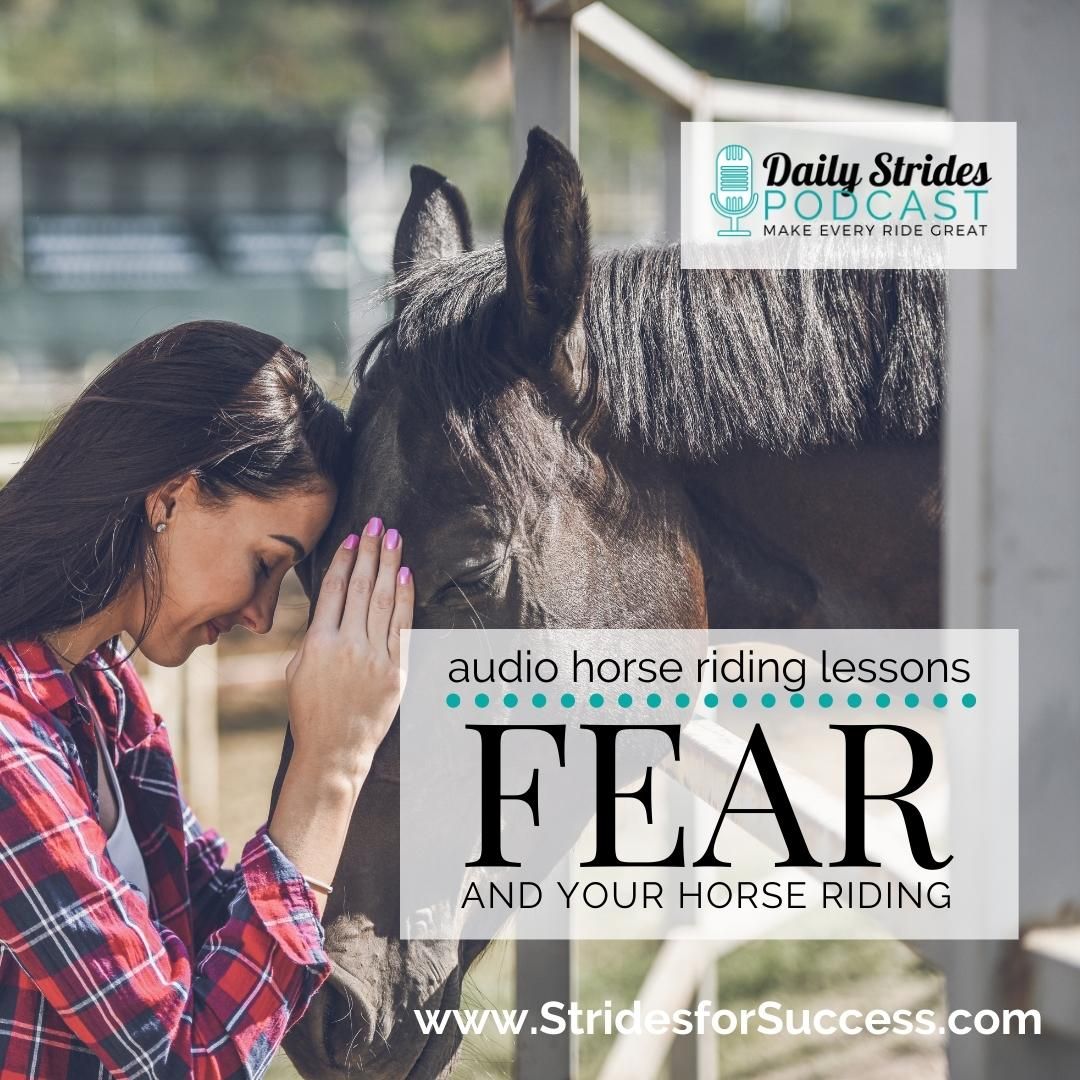
  • Fear and Horse Riding

    Fear and Horse Riding

    [fusebox_track_player url=”https://op3.dev/e/traffic.libsyn.com/dailystridespodcast/1270_Fear_and_Horse_Riding.mp3″ title=”Fear and Horse Riding” social_linkedin=”true” social_pinterest=”true” social_email=”true” tweet_text=”Getting over fear about riding or horses” hashtag=”horseriding” twitter_username=”strides_success” ]
    Has fear or lack of confidence ever held you back in your riding? If so, you will know how debilitating this can be.  Sometimes it’s caused by a past experience. Or it can be created when we think of all the things that ‘can’ potentially happen.
    Whatever the cause, I think that it is important to recognize that this particular challenge won’t simply vanish on its own.  Sure, sometimes it can seem like it has shifted or even disappeared.  But more often than not, it is simply buried and will rear its unwanted head again as soon as there is even a whiff of ‘danger’ or ‘warning’ in the air.
    I am a firm believer that confidence is something that we build over time.  Couple time with consistent repetition, self-awareness, and taking the correct action and there’s a good chance that you can overcome the fear and begin thriving again in your horse riding.

    What Are You Afraid Of?

    I think that it is important to actually name what you’re worried about in order to begin the work of changing your thoughts around it.  There is a big difference between “I’m afraid to ride” and “I’m worried my horse will spook, spin, and dump me on the ground so hard that I break something”.
    Often when we actually speak about the exact thing that we fear when it comes to our riding, we can begin to dismantle that fear in our minds
    If we take the second statement mentioned above, there are a few key areas we can begin to work on BEFORE we ever even consider hopping into the saddle. “I’m worried my horse will spook, spin, and dump me on the ground so hard that I break something”.
        1. Remind yourself that your horse, usually, doesn’t want to ‘dump you’ on the ground; especially in this particular situation
        2. What specific triggers have you noticed that your horse has reacted this way too?
        3. How can you avoid these triggers?
        4. What can you do to actually develop your horse’s confidence in himself?
        5. Is there a way you can develop your horse’s confidence in you more?
        6. Where can you ride that the chances of this happening are less?
        7. What can you do to potentially limit the severity of the fall, if it were to happen?
    When we really begin to look at the fear we have, we can also begin to approach it from a different perspective – one of curiosity.

    What Can You Control?

    Now, for years I have been preaching that the only thing you can control when it comes to riding is yourself.  However, this is not really true for this particular situation.  Firstly, when your mind is telling you terrible stories, often all sense of self-control flies out the window!
    And, secondly, I believe that there are actually external factors you can control in order to logically lessen the risks involved with riding.  It’s just that we sometimes overlook these things because we are so caught up in the ‘fear’ itself.
    You can work towards controlling things like:-
        • The time of day you ride (this often has an impact on the energy levels of both horse and rider, as well as external factors like traffic, bystanders, other horses in the arena, etc.)
        • Who you are riding with
        • Where you ride
        • What feed your horse is receiving
        • How balanced and coordinated you are
        • Creating planned responses instead of fear-based reactions
    You can also begin to develop a greater influence over things like:-
        • How fit or fresh your horse is
        • The thoughts in your head…
        • How fit and supple you are
        • Increasing the trust and partnership of your relationship with your horse
        • Developing your horse’s confidence in himself
    The key here is to actively decide to change things and then create a plan of action in order to make it happen.  Wishing, hoping, and praying won’t work in this situation!

    Maybe Don’t ‘Just Do It’…

    Now, up until this point, we have been doing the ‘thinking’ work. And while this is both important and necessary, there comes a time when action is needed. A lot of trainers and coaches will force riders to ‘just do it’. And, to be fair, this often does work in the actual moment. It also can sometimes actually be the exact thing that is needed to unmask the fear forever for the rider.
    The issue I have with the ‘just do it’ approach is that while you may get a quick win under your belt, often the underlying cause has not been resolved; and will come up again when pressure is applied!
    Pressure, in this situation, is anything that causes you or your horse to experience a little emotional or physical discomfort. It’s usually emotional. Maybe a spook for your horse. Or a lack of time for you. These are the exact moments when you don’t want to experience fear!

    What’s Comfortable Now?

    Start by figuring out where you and your horse both feel good and relaxed right now when you’re together. This could be riding together inside of an enclosed space, like an arena. However, it could also be dismounted, on the ground, with a door or a gate between you and your horse!
    It makes absolutely no difference what this is for you both now. What is important is to find that point in the conversation together where everyone feels relaxed, at ease, and enjoying the moment.
    Now, rather than mindlessly allowing these moments of true enjoyment and relaxation to simply pass, begin paying attention to how you ‘are’ in these moments.
    When you can begin to define truly what ‘relaxed and at ease’ is for you and your horse, you will begin to more easily recognize leaving that ‘comfortable’ space. And, how it feels to return to it.

    Building Confidence and Easing Fear

    So, with this point in mind, begin thinking about how you could intentionally plan to make things a little more mentally uncomfortable for you and your horse. What could you actually plan and make happen that would intentionally make you feel discomfort? It sounds bizarre, but this is truly the key to gaining confidence and overcoming fear.
    The key to planning this work BEFORE you actually do it is that you will create ‘pressure’ circumstances that can easily and quickly be reversed.
    Meaning that you can turn it on and then when you choose to, switch it off. Sounds so simple! But we can do this in our riding as well. Maybe it is walking for 20 meters with someone leading you out of the arena and back to the stables. It could be standing beside your horse holding the lead rope, with the door or gate open.
    The goal is to create a situation where you will feel that mental discomfort and commit to staying in it for 20 or 30 seconds. Then, calmly returning back to the ‘comfort zone’ and ‘safety’ again.

    Consistency, Repetition, Awareness, & Action

    Doing this once or twice won’t be enough to ‘reset’ your comfort zone. This work needs to happen consistently in order to be effective. The good news is that, over time, you will find the discomfort getting less and less.
    When the previously uncomfortable piece feels relaxed and easy, it is time to expand the ‘zone’ further. Find the next action that will build on the previous one and start the work again.
    By doing this over and over, both you and your horse will develop confidence in your own abilities. You will also begin to trust each other more, which will strengthen the partnership.
    Unfortunately, there are no quick fixes to overcome fear and develop confidence. And yet, the time invested in doing the work can yield so much more for you in your riding… It is well worth the investment.
    Happy Riding
    Lorna

    Similar Past Episodes

    Online Community & Support

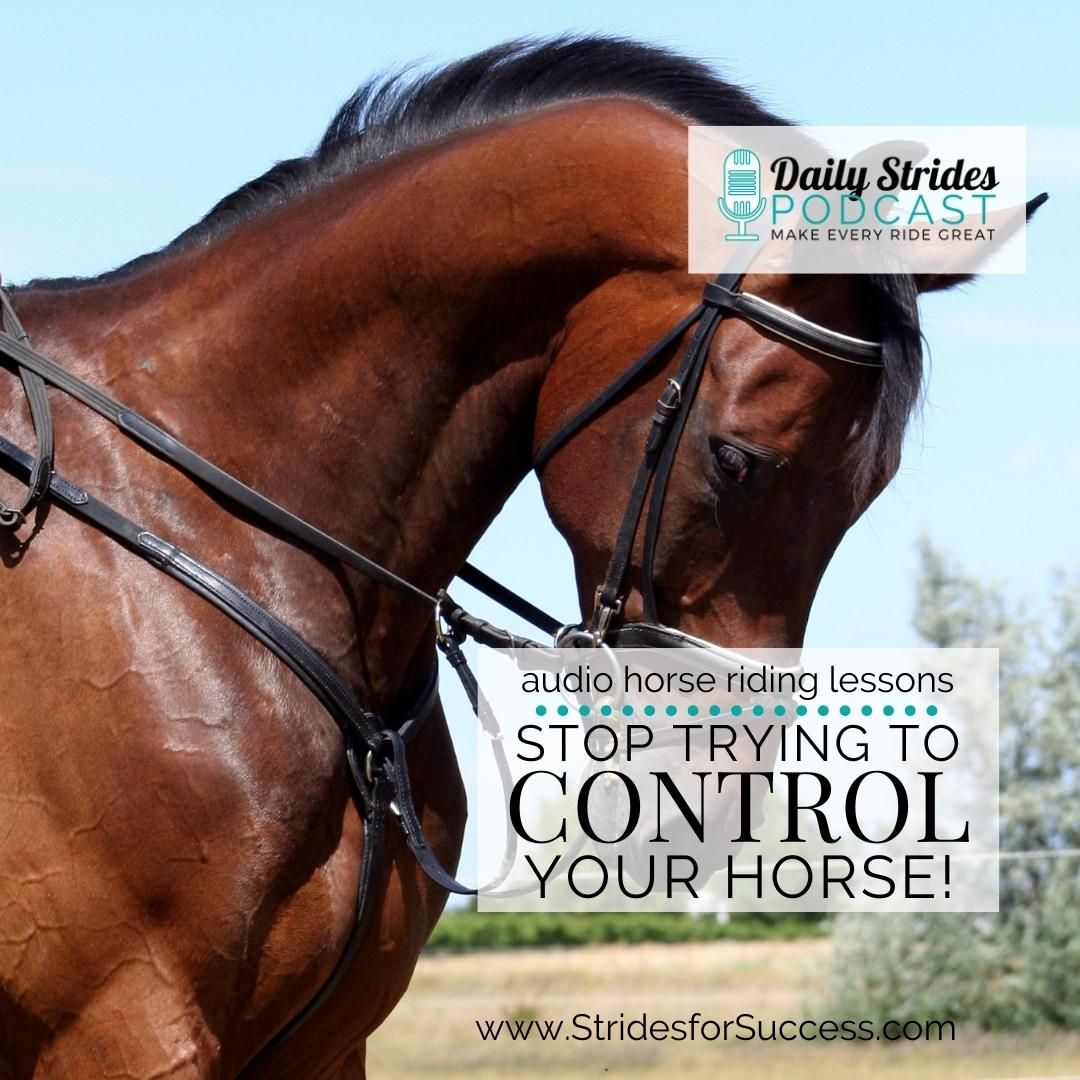
  • Stop Trying to Control Your Horse!

    Stop Trying to Control Your Horse!

    [fusebox_track_player url=”https://op3.dev/e/traffic.libsyn.com/dailystridespodcast/1261_Stop_Trying_to_Control_Your_Horse.mp3″ title=”Stop Trying to Control Your Horse” social_linkedin=”true” social_pinterest=”true” social_email=”true” tweet_text=”A different perspective on training your horse…” hashtag=”horsepodcast” twitter_username=”strides_success” ]

    For years, I was all about control when it came to horses.  I wanted to understand how to control them better, and how I could help riders do this… Until, one day, I realized I was working under a false pretense! You see, I figured something out.  It was like an ‘oh wow’ moment.

    There is no way to control a horse – or at least a way to do this that encourages the development and training of horse and rider.

    And I really and truly believe that if more riders could understand this, they can make progress far more quickly. And enjoy the whole training journey a whole lot more as well…  In this episode of the Daily Strides Podcast, I am diving into all of the reasons that trying to control your horse is actually holding you both back from doing more in your work together.

    Why You Cannot Control Your Horse

    I realize that horse riding is essentially the act of us, the riders, getting onto our horse’s backs and having them do what we want them to do.  We can debate this all day long, but this is the long and the short of it!  However, it is also really important to remember three things:-

          1. We must ‘ASK’ our horses to do whatever it is we want them to do
          2. Our horse must UNDERSTAND what we are asking
          3. Our horse must actually ‘WANT’ to do it…

    If either of those three elements is missing, things can come undone very quickly!  Now, I am going to make an assumption here that you are a conscientious, caring, and compassionate equestrian, who is not into forcing your horse (whips, ropes, and all other methods) to do things against their will…

    Your horse has a mind of his own that you can never control. So, it makes sense to stop trying – and rather focus your efforts on controlling what you can, so that you can have a more positive influence over your horse…

    What You Can Control

    In order to increase your positive influence, you can work on controlling the one thing you can do; yourself.  Unfortunately, this is often easier said than done! For many novice riders, the challenge is physical.  Coordinating your aids and developing independence can feel exhausting in the early days of riding.  And, for more advanced riders, it becomes a real mind game.

    Being able to identify thoughts and beliefs that are limiting your progress in the saddle is a skill riders must work on developing if they want to do more and go further in their riding. 

    One of the best ways I have found to do this is to have a riding journal ready after each ride or session with your horse.  As soon as you dismount and have looked after your horse, begin writing things down.  This way, over time, you will begin to see patterns.

    Couple this with some form of exercise that will complement your riding and develop strength and fitness.  Hiking, cycling, swimming, strength training, yoga, pilates… Whatever takes your fancy really!  I suggest doing something you enjoy, and then if you find that you are needing further work in a specific area, going deeper then.

    The only way you can develop your skills as a rider is to develop yourself. And doing this is the way to then helping your horse to do the same as well. 

    Where to Focus Your Attention

    From here, instead of each ride being about how well you can control your horse, change the focus.  Think about how well you can set your horse up for success. How well can you plan what you want him to do, and then communicate that to him in a way he understands and is happy to try?

    When you work on setting things up, rather than controlling everything, you give your horse the opportunity to begin really being a partner in your work together. Rather than a robot. 

    And this leads to horses who can think for themselves in a safe, calm, and effective way.  Remember, you won’t get it right 100% of the time.  And when you do find yourself in one of those ‘sticky’ situations, it is always good to know that your horse can figure it out and get you both out of it.  Phew! But this is a skill you MUST allow him to develop.  And you can only do this by stopping trying to control your horse all of the time!

    Allowing for Mistakes (lots of them)

    One of the ways we learn is by making mistakes.  We realize the mistake and find a different way to do the thing that produces a different outcome.  Your horse is similar.  He also learns by making mistakes.  And yet, as riders, this can be something we dread to allow to happen!  But it simply MUST.

    One of your responsibilities as a trainer for your horse is to allow room for him to make mistakes. Allow, notice, and then simply correct.  Then allow again…

    It is rare to see a toddler simply stand up and walk on their first attempt.  They must attempt walking a lot before they get it right. Each attempt will result in wobbles, or loss of balance, and usually, falling down.  However, we accept this as par for the course because they are learning something new. So let’s begin to gift both ourselves and our horses with the same level of grace, compassion, and understanding.

    See each mistake your horse makes as an opportunity for him to grow and develop. Then, simply make the correction in a calm, timely manner – and forget about it. 

    Using Correction to Develop Responsibility

    When you correct your horse but continue to remember the mistake, you will end up trying to control your horse. This irrational fear of him making the same mistake again will dampen out everything else in your ride together… And erode your horse’s confidence.

    Your horse’s confidence will grow in his own abilities if you simply correct each mistake, and then move on! This means allowing him to make the same mistake over, and over until he gets it right. All without judgment or holding a grudge! 

    Trust me, when you leave behind trying to control your horse, and embrace becoming more of a positive influence on your horse, your riding will transform.

    Happy Riding
    Lorna

    Links to More Helpful Stuff:-

    Join My Online Communities for Equestrians

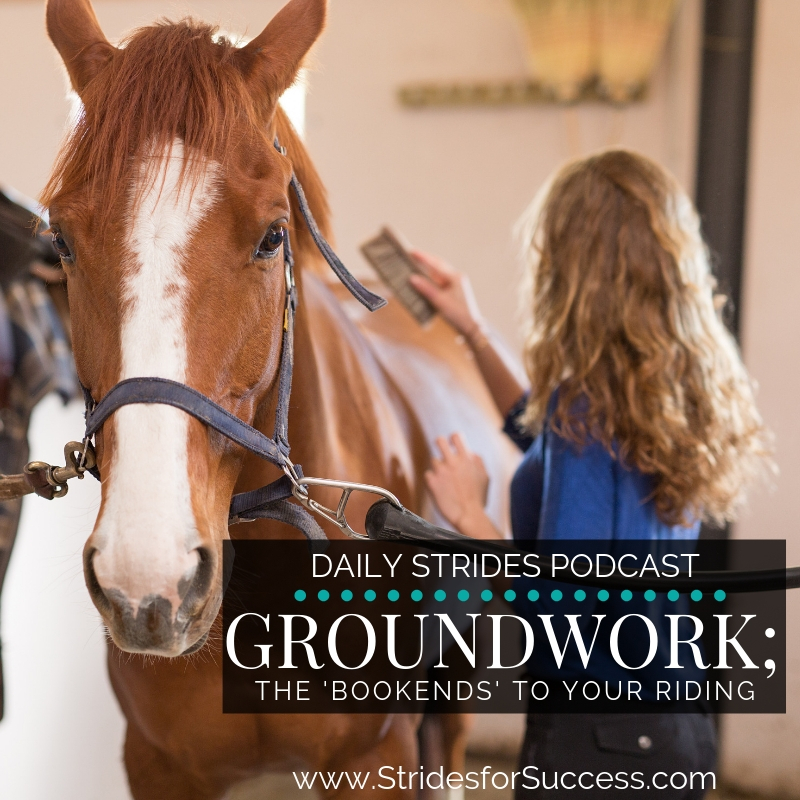
  • Groundwork; the ‘Bookends’ to Your Riding

    Groundwork; the ‘Bookends’ to Your Riding

    Groundwork; The Bookends to Your Riding

    What this episode is all about & how it can help you:-

    • Understand why groundwork is essential when working with your horse
    • Begin thinking about the importance of your position when on the ground
    • Realise that your horse might not know what you are asking or saying
    • Start becoming more mindful of your aids on the ground

    [smart_track_player url=”https://op3.dev/e/traffic.libsyn.com/dailystridespodcast/1089-Why-Groundwork-is-the-‘Bookends’-to-Your-Riding.mp3″ title=”Groundwork; the ‘Bookends’ to Your Riding” social_linkedin=”true” social_pinterest=”true” social_email=”true” tweet_text=”Groundwork is what you are doing before & after each ride… It makes sense to work on improving it…” hashtag=”equestrian #horseriding” twitter_username=”strides_success” ]

    Here’s a question for you…  Where do all of your conversations with your horse begin and end?  And where do you spend most time interacting with your horse on a daily basis?  The answer to both of these questions is ‘on the ground’.

    Groundwork is a term which describes how we communicate with our horses from the ground. Standing beside them, rather than on their backs.

    In this episode of the Daily Strides Podcast I want to get you excited about improving your groundwork!  If you think this is something that doesn’t deserve your time or attention; I urge you to think again!

    Groundwork really is the bookends to every ride you have with your horse.  So it makes sense that improving communication there, will lead to clearer communication in the saddle as well…

    Firstly, What Groundwork Is Not!

    There is often a misconception surrounding groundwork that lumps it into the same category as natural horsemanship.  Great if you are into natural horsemanship.  Not so great if you are more focused on ‘riding’ and, possibly more so, competitive riding.

    Now, before you get excited, I am not personally against natural horsemanship.  However I have met a lot of riders throughout the years who seem to be of the opinion that they can only enjoy one or the other.  Natural horsemanship or ‘real riding’ (their words, not mine).

    I don’t believe this to be true. But, even if it was, groundwork is NOT natural horsemanship.  There are similarities between the two, but then everything with horses is related, isn’t it?!

    The point I want to stress is that groundwork is essential for EVERY rider, regardless of discipline, beliefs or goals. 

    Groundwork is also not something that you only consider before or during the ‘starting process.  I don’t know of many things to do with horses that you touch once and then leave.

    Most things with horses require revisiting and refining.  Groundwork is no different.  As your relationship grows and develops, so too should your groundwork.

    Becoming Clear on What You Want on the Ground…

    When you go to ride, lunge, clip, turn out – insert appropriate verb – your horse, you meet your horse on the ground.  There needs to be a certain level of understanding present between both of you.  Clear communication is just as important on the ground as it is in the saddle.

    Many riders seem to just assume that horses are born knowing all the ‘rules’.  They innately know how to handle themselves however the rider wants them to…

    However, even if this was true (which it is not), every rider has different expectations when it comes to their horses behaviour on the ground.  Some people enjoy horses who ‘push the boundaries’.  A free spirit.  Other riders would much rather their horses act more like robots than living breathing creatures with minds of their own…

    Luckily, the majority of riders fall somewhere into the middle ground of this spectrum.  They enjoy a well-mannered horse who can, if the situation calls for it, think for himself. 

    Why I feel Groundwork is ‘Essential’ for Your Riding

    How your horse communicates with you is how he has been thought to communicate with you.  He may have learned this from you.  Or from one of the other many people he has come into contact with throughout his life.

    What is important to recognise is that the communication is a learned one.  He has learned to respond to certain things in particular ways.  

    These can be, in your opinion, positive or negative.  To your horse, they just are the way he has been thought or allowed to conduct himself.

    The onus is therefore on you, the rider, to begin working with your horse on the ground in a mindful way.  Focus on teaching him how you would like him to respond to you. 

    Good groundwork leads to less stress.  It means that all parties understand what is expected of them.  Very often, it leads to a more productive and relaxed ride or schooling session.

    Start with Your Position

    So just like your communication in the saddle begins with a correct or good position, so too does your communication on the ground.  Your position on the ground will influence how clearly you can communicate something to your horse.

    Communication is all about your message being ‘heard’.  Positioning will decide easy it is for someone to hear you…

    A common mistake I see time and again with young and mature riders occurs when leading horses.  The rider will walk in front of the horse.  Now, depending on what someone has taught the horse, this can often work for them… Until it doesn’t.

    Eyeball to Eyeball… A Big No!

    If the horse becomes unsure of something, or just doesn’t want to go somewhere, leading from this position just won’t work.  The rider is standing in front of the horse, pulling the horse forward.  The horse is leaning backwards, stretching out his head and neck.  He has no intention of moving forwards!  A tug of war ensues and most often the 600kg horse will win the war.

    Rather think shoulder to shoulder… (I know, if you’re Irish and you enjoy rugby, your smiling while humming the tune…!)

    If the rider simply walked beside the horse, a few things would happen.  First, the horse would feel more confident.  Second, the horse actually has a space to move forwards into.  Thirdly the rider won’t find themselves squaring up, eyeball to eyeball with their horse.  A posture which is more aggressive than encouraging.

    Very often with groundwork, just like in riding, the rider needs to become aware of the impact they are having on the horse, before they are willing to begin changing their behaviour. 

    Does Your Horse Understand What You’re Saying?

    It can be frustrating when you are doing everything ‘right’ and your horse just won’t respond the way you want him to!  It can lead to all sorts of judgements being passed on the horse because of his behaviour.  He’s naughty or misbehaving.  Maybe he is ‘ignoring’ you or inattentive.  You might find yourself, as was the case for me, muttering about him being downright ‘bold’.

    However, maybe your horse has been thought something different.  Rather than being naughty, he simply might not correctly understand what you are asking. 

    As mentioned, it is very rare to work with a horse that has never worked with another person.  Most horses will have experienced all sorts of different interactions with all sorts of different people.  Farriers, trainers, vets, riders…

    If you find yourself trying to explain something and you’re being misunderstood, change something!  The onus is on you to explain yourself differently or better.  

    It is not up to the person with whom you are trying to communicate with to change how they are listening or responding.  Your methods must become clearer.  You need to communicate in a way that you can be correctly understood.

    Understand Your Basic Aids on the Ground

    Just like when in the saddle, you have basic aids which you can use while on the ground.  Clear groundwork aids that you use while on the ground need to be clear and concise.  When you are riding and want to convey something to your horse, you do so through your aids.

    You have similar aids which you can use when you are on the ground with your horse.  Becoming mindful about how you use them is key to successful groundwork.

    It begins with you understanding your aids.  From here, you can successfully apply those aids in a way that your horse can begin to recognise and understand. 

    Telling Your Horse When He Gets it Right

    With all of the above in place, your communication will still only be as good as your horse understanding what you are saying.  You must tell him when he gets it right.  Each time you ask something, tell him when he responds correctly.

    This is where I believe you can really start to bridge your groundwork communication with your aids in the saddle. 

    How you ask and how you reward from the ground should be similar to what you do from the saddle.  That way your horse can continue the conversation from ground to the saddle.

    Groundwork is a huge topic, but one that I feel is essential for all riders – regardless of discipline or goals in and out of the saddle.

    Happy Riding

    Lorna

    Other posts, episodes and resources that relate to this topic:-

    The groundwork series is a full, 4 week series which guides you through groundwork with your horse.  Daily audio trainings which you can use to completely overhaul your groundwork with your horse – or just make little tweaks that will have a huge impact.

    The groundwork series is all available in an easy to use ‘feed’, which will put all the trainings straight onto your phone.  Meaning you can use them where ever you want, when ever you want

    All the trainings and the lunging series, the long line trainings and so much more are available for you immediately when you join Daily Strides Premium. Find out more HERE

    CLICK HERE TO BEGIN SUCCESSFUL LUNGING OF YOUR HORSE TODAY

    For more information visit the links below
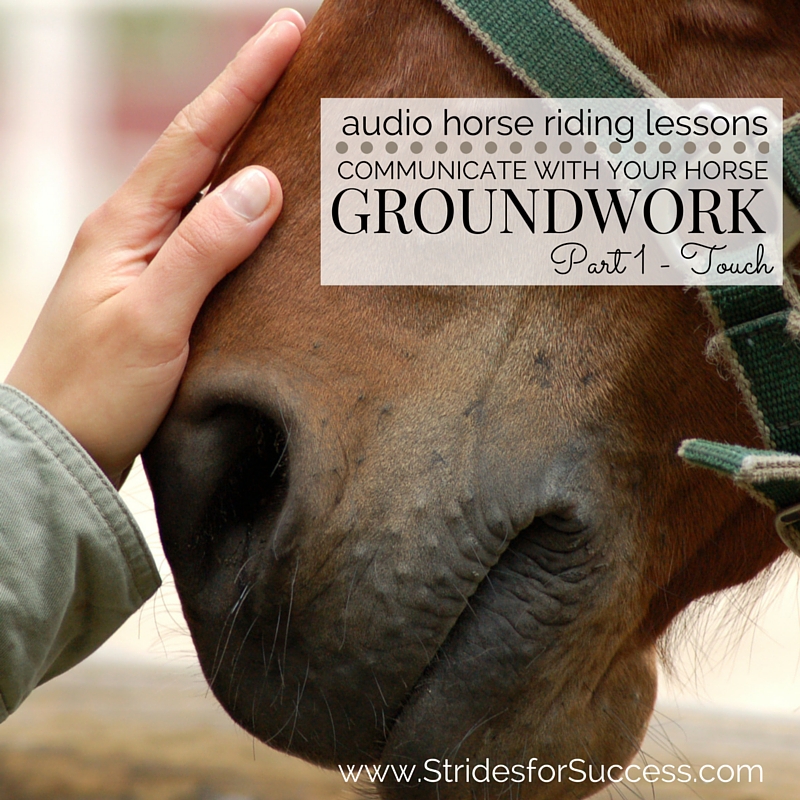
  • Communicate with Your Horse through Groundwork – Part 1 Touch

    Communicate with Your Horse through Groundwork – Part 1 Touch

    Communicate with your horse through touch - Groundwork part 1

    How much time do you spend strengthening your relationship with your horse while on the ground?  Many riders only think in terms of ‘riding’ when they think of communicating with their horse.  However there are many other ways you can begin to not only create a stronger sense of trust but also to improve your horse’s overall training.

    [smart_track_player url=”https://op3.dev/e/traffic.libsyn.com/dailystridespodcast/641-Using-Groundwork-When-Training-Your-Horse-Part-1-Touch.mp3″ title=”Groundwork Part 1 – Touch” social_linkedin=”true” social_pinterest=”true” social_email=”true” tweet_text=”Groundwork and how it can help your riding” hashtag=”horses #equestrian #makeeveryridegreat” twitter_username=”strides_success” ]

    Groundwork is really exactly what it sounds like.  It is working with your horse while being on the ground, rather than in the saddle.  Unfortunately many riders see this work as being a means to an end while starting or backing young horses.  This is completely untrue.

    In fact, groundwork is something that can help develop your overall conversation with your horse, regardless of where you are in your training or development.

    Groundwork can be beneficial at any point in your horse’s life.  From a young, unstarted and nervous 2-year-old, to an older 20 plus senior

    How ‘Good’ Groundwork Can Help You & Your Horse

    The benefits of working with your horse on the ground are far-reaching for both horse and rider.  It helps to build trust and to establish certain ‘personal space’.  This helps to build respect for you as your horse’s leader.

    Working with your horse from the ground allows you to get to know what is ‘normal’ for your horse, both emotionally and physically.  Groundwork will also help to begin desensitising your horse.

    Groundwork allows you to being instilling basic training principles that can be transferred across to training while in the saddle later

    From a health perspective, different types of groundwork can help promote circulation, loosen or relax stiff or tense muscles.  It also allows your horse to become familiar with you touching more sensitive areas of his body without fear or apprehension.

    Using Groundwork To Compliment Your Riding

    I really feel that we are constantly communicating with our horses, not just when our bums touch down in the saddle.  Groundwork is a great way of keeping the conversation, and often training, moving forward when riding is not possible.

    This can be for any number of reasons; time constraints, injury, weather or just to add something different to your horse’s training plan or schedule.

    Groundwork can be used to either explain principles that you will or are using in the saddle. Correct groundwork will also strengthen your aids and overall communication when you are riding.

    In fact, I am a huge believer of using the necessary ‘groundwork’ that happens before rides to help relax and set the tone of the overall conversation for the ride.

    Using ‘Touch’ to Work with Your Horse

    In this particular blog post I want to focus on groundwork relating to touch.  More specifically, how you can begin incorporating massage, stroking and basic touch techniques into your training with your horse that will be enjoyable and educational for both of you.

    So, before we go any further, it is important to note that in order to work with your horse, you will need to be in a safe and suitable environment.  Very often when your horse is being massaged, he might become so relaxed that any sudden or different movements or noise can cause an unexpected reaction from him.  This could potentially lead to accidents.  It is also important to wear your helmet at all times when working near or around your horse.  Once you have chosen a suitable location you can then begin working with your horse.

    It may sound a little strange, but the attitude and energy you approach your horse with can play a big part in how your horse reacts to you and your touch.  Keep your mind calm.  Free of stress and, just like when you ride, try to remain focused on the task at hand throughout the groundwork session.

    Being relaxed and feeling confident and present is vitally important to the success of your work, whether it be on the ground or in the saddle, with your horse

    Respecting Boundaries and Personal Space

    Do you, like many riders, only think of boundaries and respect from your own point of view? We need to also give our horses the option of saying ‘no’ if they feel uncomfortable.

    Obviously the types of touches or work you can do with your horse will depend on the relationship you have with your horse.  Nervous or anxious horses should be approached in a sensitive manner and only touched where they allow you to.

    The aim is to build trust, so forcing any particular connection or touching of a certain area will only serve to damage that fragile relationship, not strengthen it.

    Your horse will let you know what he is happy with.  Look for signals from him such as yawning or licking and chewing.  This generally occurs when your horse is feeling relaxed and enjoying the proceedings.  Pinning their ears, lots of anxious, tense movements or lifting the head or tail higher will rather tell you to leave well enough alone.

    Staying Inside of the ‘Comfort Zone’

    At any point if your horse becomes uncomfortable with what you are doing, go back to a place where they are happy and rather work there for a while.  It may take a few sessions before you have built up enough trust to move on from there.   Also keep in mind that, just like us, there may be days that your horse just does not want to be massaged or touched!

    There are many different ways you can use your hands that will promote a different feeling in your horse’s body.  Again, the key is finding what your horse is comfortable with initially and then working on from there.  

    I suggest beginning with just stroking the neck, shoulder and back area where the saddle would sit. Use your whole palms and fingers and rub in the direction the hair lies naturally

    One of the easiest ways to promote a bond is to always have one hand on your horse.  You can do this by making sure the hand finishing the one stroke remains on your horse until your other hand begins the next stroke.

    Pay Attention to the Pressure You’re Applying

    Think about the pressure you are applying as well.  Start each stroke with a soft pressure and build to where you want.  Then finishing the stroke with a similar pressure to where you began.

    Very often the amount of pressure will depend on your horse and the area you are working on, but most often horses enjoy  something around what you would apply when using a rubber curry comb or similar.

    Too soft and it may tickle or annoy your horse, too hard and your horse may find it uncomfortable or even a little sore.

    Experiment with What Works for Your Horse

    Once you have worked over the neck, shoulder and back area like this, you can begin experimenting with using your hands in different ways.   One such way is using your hand to move the skin in small circles on a particular area.  Simply lay your hand on your horse’s coat and, applying a little more pressure with the sides of your palm and fingers, begin moving your hand in a small slow circle.  Your hand will not move from the area, rather just move the skin around over the muscle underneath in that specific area.

    Again, while you are doing this with your one hand, keep your other hand on your horse to help promote that feeling of connection between you

    Finally, you can also begin to loosen out the neck and crest area by gently squeezing there with your hands.  Just like it feels good for you to have your hair slightly and gently tugged or squeezed, it also is an enjoyable feeling for your horse.  Start at the withers and work up towards the poll.  Only go as far as your horse is comfortable with and then begin working your way back towards the withers again.

    Keep in mind that even though your horse might not enjoy you working near his ears or head initially, consistent calm work like this will encourage him to trust you.  This will eventually lead to him allowing you to work around his head and ears in a safe manner

    Touch Is Just One Element of Groundwork

    Groundwork is a big topic.  There are so many different ways you can begin using this both in the stable and the arena. In the next blog post, which you can find HERE, I discuss the concept of pressure and release.  This is a foundational principle to you successfully working with your horse on the ground, and in the saddle.

    Taking the time to truly connect and work with your horse through groundwork will add a whole new dimension to both your training and your relationship with each other.  I suggest starting today with your horse and see where it leads you both.

    Happy Riding
    Lorna

    Save Your Seat for the Upcoming Live Online Training HERE

    CLICK HERE to save your seat for the upcoming free live training on groundwork

    If you are interested in learning more about incorporating touch into your groundwork training with your horse, we have created a full series of audio trainings, inside of Daily Strides Premium, that you can listen to which will help you begin building a routine with your horse.

    There is also a full workbook to go along with the audio trainings.  This includes the different types of movements you can use when working with your horse. Visit https://stridesforsuccess.com/join/ for all the details.