Tag: rider fitness

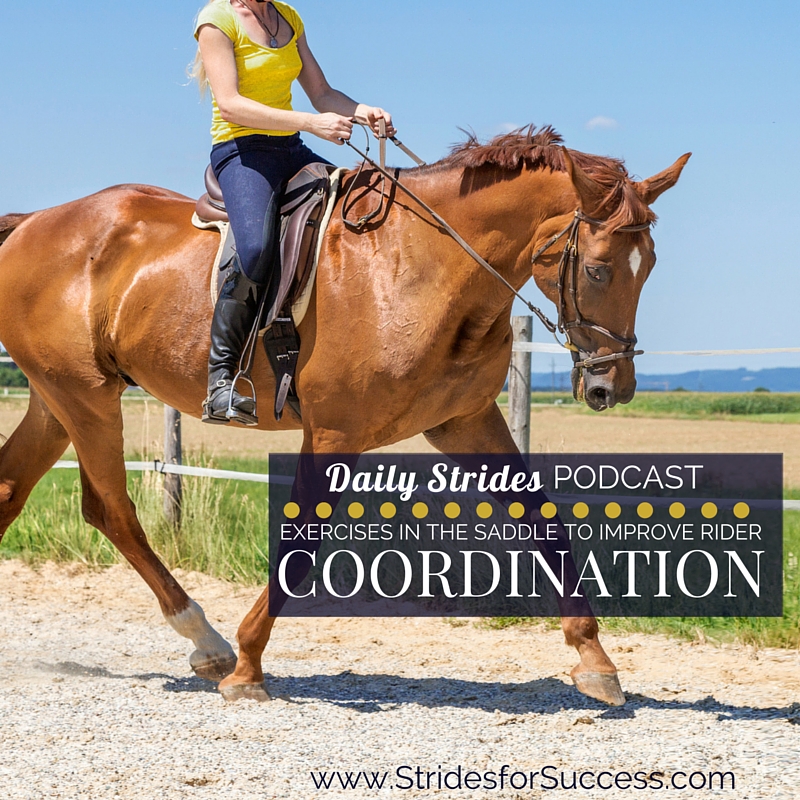
  • Improving Rider Coordination

    Improving Rider Coordination

    Coordination; It’s always a wonderful feeling when you can do something effectively without having to put too much thought or effort into it. Being able to cultivate this skill, regardless of what is being done, takes a large number of hours invested in practice. However in order for that practice to be beneficial, it must be correct or perfect practice.

    This is the one element that trips many riders up when it comes to having more coordination in the saddle. Hours are spent moving through particular school shapes, years dedicated to specific movements; however unless the practice is correct and performed in the correct sequence, the benefits will be slow to appear – assuming they ever do.

    [fusebox_track_player url=”https://op3.dev/e/traffic.libsyn.com/dailystridespodcast/666-Improving-Rider-Coordination.mp3″ title=”Improving Rider Coordination” social_linkedin=”true” social_pinterest=”true” social_email=”true” ]

    Watching a rider who is coordinated riding side by side with one who is not is like watching a chicken trying to keep up with an eagle in the flight department! It is one of the most decisive factors in the outcome of each ride and quite unique in that each rider’s coordination, whether it be good or bad, has very little to do with the horse underneath the saddle.

    You know that as a rider, being able to communicate with your horse about what you would like him to do requires you to apply a particular set of aids, in a specific sequence. In fact, many different movements or directions we give to our horses have similar, if not the same aids, but it is how and when they are applied that make the difference.

    Improved rider coordination makes the communication between horse and rider more fluent, more subtle and more effective

    For those with a lack of coordination, each movement must first be thought out in their head – a list of sorts created out of the aids that must be applied to achieve that particular goal. But having to think things through, step by step, almost ensures that the subtleties which make all the difference, go unused and forgotten. Things like the amount of pressure applied, or how long an aid is held, or making quick adjustments to timing, sequence, and pressure as necessary.

    Essentially, being coordinated in the saddle means that you can perform the ‘sequence’ of aids without having to consciously think about it; leaving you open to rather focus on the more subtle aspects of your aids and course correcting as the movement progresses

    So how can we be sure that our practice is indeed helping to improve our coordination in the saddle?  Let’s focus on the idea of perfect practice. I see a lot of riders in the saddle who are happy with mediocre ways of doing things, particularly the basics. I think that riding must be fun and enjoyable, but a large part of that enjoyment is getting the basics right from the start. There are times with riders when I feel that they are really and truly just wasting time, money, and energy because they do not see the importance of creating a strong and solid foundation from where they can then grow their skills.

    Things like how you are sitting in the saddle. How you use your core to communicate with your horse – from the first time in the saddle. Where your leg is in relation to your body. Carrying your hands. Opening up your chest as you ride. As an instructor, there is nothing as frustrating as having to repeat the same thing to a rider, week in and week out.

    What is most ironic is that those same riders, who won’t take responsibility for their own body in the saddle are very often the ones who are very quick to blame the horse or circumstance for their lack of progress

    Becoming responsible for your body and how it moves in the saddle is something you can begin doing today. Is there one thing that you consistently do that you can start working with right now? For me, it was a tendency to allow my left hand to ‘turn’. My right hand remained where it should be, but my left hand… Knuckles on top and, if left to its own devices, it would dip an inch or three lower than its partner. It was something that, once it was pointed out to me, I became so aware of every time I was in the saddle. I would set myself a goal in each training session; not have my trainer mention my wayward left hand once in the time we were together. Initially, I had to continuously ‘check’ myself; I created little markers around the arena where a mental alarm bell went off to ‘fix my left hand’. It was exhausting, but it worked – In fact to this day I subconsciously correct my left hand when riding; without ever having to remind myself to do so.

    Improving Rider Coordination

    The challenge for many riders is that they are not willing to make correcting one thing a habit to begin with. But becoming almost obsessed with the most basic of your riding faults and committing to ‘fixing’ it before even thinking about moving on to the next one is the most effective way to make your practice as perfect as it can be. One of the other benefits of doing this is that once that basic building block is in place, a lot of other issues you thought you had will vanish. Many riding faults are merely symptoms of a larger, and more basic, fault to begin with.

    Putting that fault on ‘autopilot’, so to speak, frees your thinking brain up so you can begin focusing on the more intricate and subtle aspects of communicating with your horse when in the saddle

    Create small checkpoints around the arena to remind yourself to ‘fix’ that fault. In doing so, you are building systems within your own schooling sessions, regardless of if you have a trainer with you or not, to help make your practice become better and better each time.

    Another way to improve your coordination in the saddle is by physically improving your body and how it can handle itself. It always amazes me how riders will spend weeks, months and years planning their horses fitness program – while never giving a single thought to their own physical performance in the saddle

    Having taken some longer breaks from riding at different times over the years, I can tell you from first-hand experience that very often when I get back into the saddle often feels like my brain and body and speaking a different language! My brain knows what to do and how to achieve a particular outcome, but my body just physically can’t / won’t respond in order to carry the aids out. It is the most frustrating thing about being out of the saddle for any sort of period of time; in fact at 6 months pregnant right now, I am wondering if my body will ever feel like it used to again!

    I see a similar situation with riders who only get into the saddle once a week. We spend the first half of our time together ‘re-tuning’ their aids and coordination in order for them to be able to really begin riding. However there is a way to mitigate this; whether it be a prolonged break from riding like myself, or longer periods between less frequent rides like some of my students – exercise.

    Fitness and exercise are like everything else, you get out what you put in. The quality of the movements and how well they translate across to your riding is what matters.  For more information on how to become a better version of you in the saddle, you can visit https://equestrianfitnesschallenge.com.

    This topic is fleshed out into individual exercises for you to ride that will begin today helping you to improve your coordination when in the saddle.  There are 4 additional audio programs for you to download and listen to on your phone that will take you to step by step through putting those basic ‘fixes’ on autopilot, allowing you to free up your thinking brain for the more complex parts of riding a horse!

    If you are interested in getting this full week of audio programs, as well as access to over 600 other audio programs that will take you step by step through different topics about horse riding, visit www.stridesforsuccess.com/join/ to find out more.

    Happy Riding
    Lorna

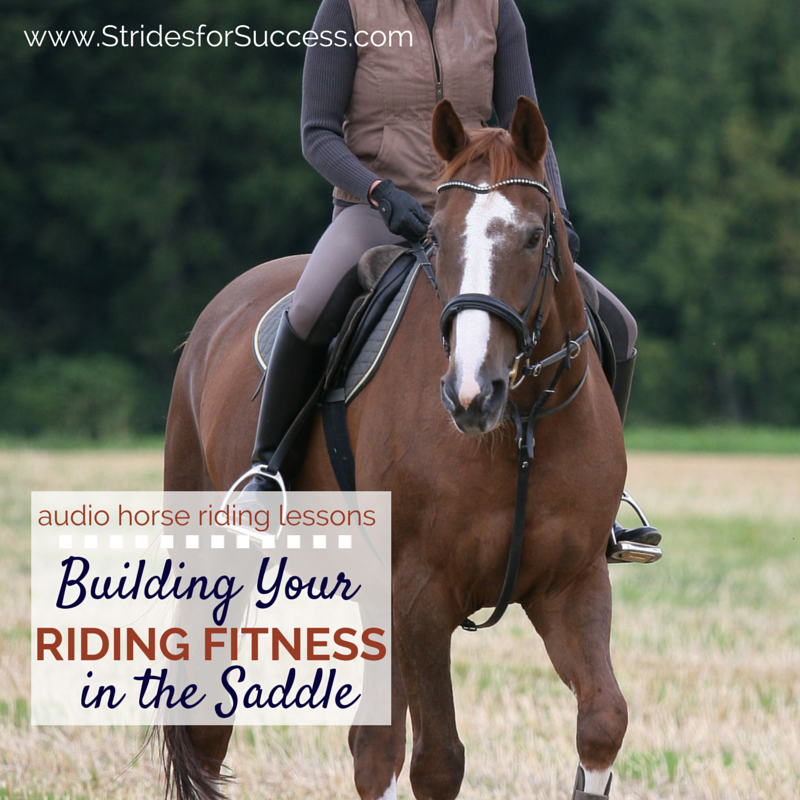
  • Building Your Riding Fitness

    Building Your Riding Fitness

    [fusebox_track_player url=”https://op3.dev/e/traffic.libsyn.com/dailystridespodcast/SFA421-Building-Your-Riding-Fitness-While-in-the-Saddle.mp3″ title=”Building Rider Fitness in the Saddle” social_linkedin=”true” social_pinterest=”true” social_email=”true” ]

    Do you find yourself huffing and puffing after a few strides of canter?  Have you been riding less recently and find that now your back in the saddle, you’re less effective than before?  Are you spending hours schooling your horse but seeing little to no difference in his way of going…

    It often amazes me how much time, effort, planning, and work riders put into conditioning and increasing the fitness levels of their horses. And yet completely fail to invest even a little of that towards their own fitness levels!

    Contrary to popular belief, riding is a team sport… You and your horse!  So it leads us to the fact that, as with any team sports, it is essential that all members of the team are doing their best to contribute to the team’s success.

    How Will Increasing Your Riding Fitness Help?

    Increasing your level of fitness with regard to horse riding has numerous positive consequences on your overall performance in the saddle.

    You will find that you become increasingly better able to communicate with your horse. And your aids will become easier to apply and clearer for your horse to understand

    You will also develop a more independent seat as your core strength grows. This, again, will increase your effectiveness in the saddle. Another huge positive result is that any stiffness and rigidness that you are holding within your body will begin to dissipate as you both physically and mentally begin to have more faith in your abilities. And, of course, your stamina levels will increase too…

    Meaning you can enjoy your more canters and for longer periods!

    Building Your Riding Fitness while in the Saddle

    Setting Yourself Up for Success

    Before we go any further, it is important that in order to ride these exercises, you are on a trustworthy horse. I also strongly suggest riding in a safe or enclosed area.  A young horse or a strange place is not the best time to try out new exercises. Especially ones that will test your balance and strength!

    If your horse tends to ‘wander’ when you are not directing him, perhaps creating a small chute in the arena using jumping uprights and poles will help. This will allow you to focus on what you are doing. And ensure that you get the most out of the exercises.

    These exercises are also excellent to do while warming up or cooling your horse down.  It is you that must do the work, not your horse!  

    Getting Started; Your Position

    I suggest beginning with giving your position a quick once over, and check that you are in a correct alignment.  Simply put, you’re sitting correctly in the saddle.

    Take your feet out of the stirrups, and start with some light stretches.

    After this, you can begin the first exercise. This involves drawing up your knees, one at a time, to your horse’s withers.  While you are doing this, pay close attention that your upper body remains straight and upright.  It is tempting to ‘curl’ your lower back and shoulders when performing this exercise but don’t.

    Focus on identifying your legs individually and then lifting them using only your leg to do so.  

    Use your core muscles to help you keep your balance while your knee is raised.  Hold it for a few seconds and then gently replace your leg and repeat on the other leg.  If you are feeling brave, you can raise both knees at the same time (jockey style), however again, make sure you are not crouching with your back and shoulders.

    Legs & Core Strength & Fitness

    This is a super exercise not only for your legs and core muscles, but also to help you make sure you are indeed sitting on your seat bones.  It also helps to relax the pelvis which will help with the other exercises and your riding in general.

    If you find that you are feeling unbalanced or concerned about ‘tipping over’ out of the saddle, rather ask your horse to halt and, having someone hold him still if necessary, complete the exercises while your horse is standing still.  

    With your feet still out of your stirrups, begin stretching your legs down nice and long.  Then one at a time lift your leg away from your horse’s side. There should be daylight between your leg and the saddle.

    Try to lift your lower and upper leg. But, make sure that while you lift, you are not leaning your body weight to the opposite side to lift your leg for you!

    The lift must come from the muscles on the outside of your hips and the sides of your torso.  Pay attention that your body remains upright and not collapsing down.  

    After you have managed to lift each leg individually, you can then try lifting both legs together.  Again, it is tempting to lean forward and curl your upper body. But try to continue carrying yourself as you perform the exercise.

    Introducing Sitting Trot

    You can also incorporate some sitting trot work into this initial warm-up.  Pay attention that you are keeping your pelvis and thighs open. Not gripping up, but rather stretching your leg down around your horse.

    Focus on allowing your lower body to move with your horse in almost a back and forward motion rather than an up and down motion.  You can also work some circles into your school movements, all the while maintaining a good basic position.

    Posting in the Walk

    Another great exercise you can work on to increase your fitness levels is posting in the walk.  Obviously you will need to take your stirrups back for this exercise, and once your feet are in…  Yes, you guessed it; Check your position!

    Posting or performing the up-down movement from the rising trot while walking can be quite a challenge. This is due to the fact that your horse’s natural momentum in the trot is not there to help you.

    Keep in mind that when you post or stand, you are doing so on your heel, not your toes.  

    Also, that your lower leg remains underneath you.  Many riders will try to use their upper bodies to ‘pull’ themselves up and whether or not they use the reins, this is incorrect.  Rather think of pushing yourself up using your legs.

    Once up, it will require your core muscles to help you maintain your balance and lower yourself back into the saddle with the sufficient ‘grace’ that is required!!  Do not allow your body to fall back into the saddle as you come down as it will be uncomfortable, and may even hurt, your horse’s back.

    FREE 30 Day Rider Fitness Challenge

    Standing in the Stirrups

    Developing on from the highest point of this exercise, you can begin to ‘stand’ in your stirrups as you walk around the arena.  When standing, keep in mind that your knees will have to keep a slight bend in them in order to help you absorb the movement of your horse underneath you.

    It is, again, worth mentioning that you should not use your reins for support and balance while performing this exercise…  

    Rather hold a martingale strap or even a stirrup leather that is secured around your horse’s neck for support if necessary.  Also, make sure you do not collapse down into the saddle when you have finished.  Gently lower yourself into the saddle…

    Or remain ‘standing’ in to the trot and even the canter.  This will use your legs and also your core muscles to achieve it correctly.  Start off slow and for short bursts, working over time to longer periods at faster paces.  

    Additional Exercises to Increase Fitness

    Other exercises you can use, which we cover step by step in this week’s Daily Strides Premium are changing the variation of your posting while trotting.  Rather than the usual up, down, up, down, up, down; rather begin sitting or posting/rising for an extra beat.

    This would look like up, up, down, up, up, down, up, up, down, or the other way around; down, down up, down, down, up.

    All variations of this will firstly create mindfulness around what you are doing while you post or rise. And, secondly, require your core muscles to shift from sitting to the rising trot more frequently than your normal up, down, up, down does.

    You can also work in the two-point seat…

    In fact, this is a great way to initially test your riding fitness levels by seeing how long you can hold the position, independently, before sitting down.  Work at increasing this time period on a weekly basis.  Make sure, again, that the weight is down in your heel and that your back is straight, not rounded or arched.

    Your Riding Fitness Is Your Responsibility

    As you can see there are numerous ways to incorporate a mini-workout into your everyday riding and schooling.

    Very often with adult riders, time is the greatest challenge when it comes to fitness, however as before, all these exercises can be performed while you are warming up and cooling down.

    Happy Riding
    Lorna

    Additional Resources for Equestrians