Tag: confidence

  • Riding & Acting; the Connection

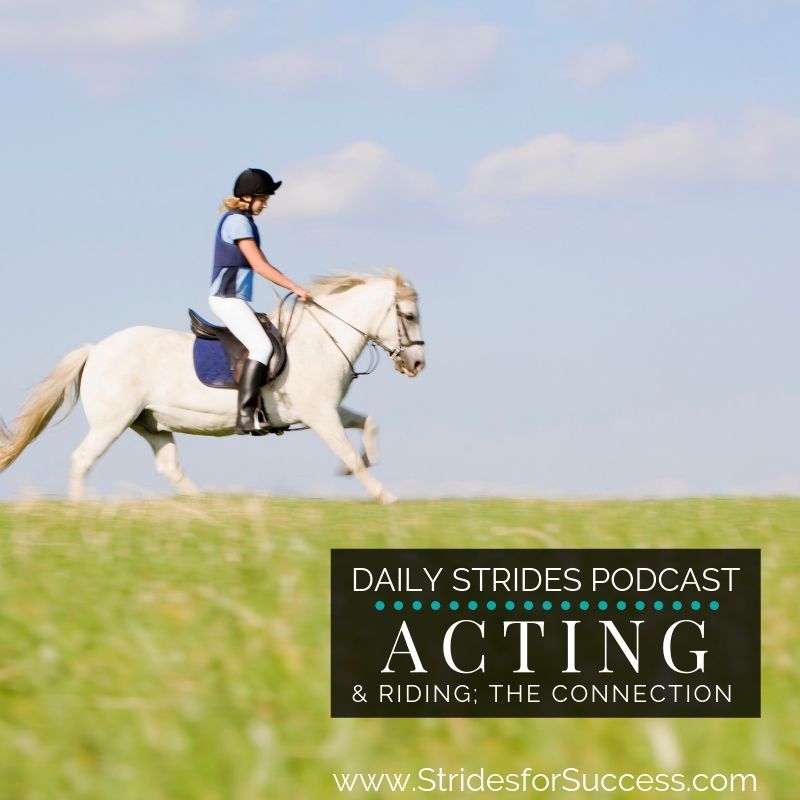
    Riding and Acting; the Connection

    Have you ever considered how, in order to be a good rider, you must be a good actor? Don’t worry too much if you haven’t, you’re not alone… Many riders fail to see the connection between these two things.

    As a rider, you will see a marked difference in your abilities in the saddle, especially when under pressure, if you work on your acting skills in the saddle.

    [smart_track_player url=”https://op3.dev/e/traffic.libsyn.com/dailystridespodcast/1107-Riding-and-Acting%3B-The-Connection.mp3″ title=”Acting & Riding; The Connection” social_linkedin=”true” social_pinterest=”true” social_email=”true” tweet_text=”A good equestrian is usually a good actor… Really! Here’s why…” hashtag=”equestrian #horseriding” twitter_username=”strides_success” ]

    In this episode of the Daily Strides Podcast I am going to give you a few ideas on how you can begin developing your acting skills, beginning right now…

    What has Acting to Do with Riding Horses?!

    Tell me, when was the last time that your horse reacted to something in a way you did not expect? Maybe he spooked. Or perhaps he stumbled. He possibly was simply full of the joys of life…

    Whatever the reason, when our horses act in a way we don’t expect, it can throw us off our concentration and efforts. It derails us a little… For many riders this leads to becoming ‘stuck’ and a loss of confidence in abilities.

    However, have you ever considered that your horse doesn’t know that you actually haven’t a cooking clue whats going on; or how things are going to turn out?!

    The key is acting well enough to keep the ball rolling. Keep the conversation going. Which will result in both you and your horse moving forwards. Past the ‘thing’ that had all the potential for both of you to become ‘stuck’.

    Knowing What You Want…

    Have you ever noticed how it is often difficult to get clear on what you really want. That is, until you are presented with what you definitely don’t want! I see this happen to riders all the time. Something happens that they become almost crippled by it. The thing that they don’t want.

    “How does ‘Insert Other Riders Name Here’ do this? How do they manage to just ride out of / through / over this?”

    These feelings are often coupled with the realisation that your horse has gained the ‘upper hand’. Your horse now knows the real truth; you really haven’t a clue what you’re supposed to be doing most of the time! You’re essentially winging it and hoping he doesn’t notice.

    Which is great until it’s not. Until he notices that, for whatever reason, you are unable to ride out of / through or over this particular one…

    How Is Your Horse Feeling Right Now?

    Now, I personally believe that far from your horse wanting to gain this hypothetical upper hand, he may just be as confused as you are. Horses, epsecially if they are more green or young, look to their rider for guidance.

    When the rider falls to pieces, well it doesn’t really inspire confidence in their leadership abilities. It often makes the horse question things. Is this safe? Should I rather not get out of here A.S.A.P?!

    It is really important to remember that, whether you like it or not, you are in a position of leadership when it comes to your relationship with your horse.

    It is okay to admit that things have veered a little from the plan. However it is not okay to fall to pieces when your leadership skills are needed most. Especially when this is what you really feel like doing!

    It’s All About ‘Pretending’

    Sure, you might not have a clue how to handle what has happened; but as a leader you need to ‘pretend’ that you do. In fact, you need to convince your horse that you not only are prepared for this, but have the perfect plan to work through or around it as well.

    There is a moment of initial discomfort. If you can have the self awareness to recognise this; and then act accordingly, you can turn the whole situation around.

    The initial discomfort is the sign that you are moving away from what you want, into the ‘I definitely don’t want this’ territory.

    Therefore, by recognising the discomfort and then using it to remind you to refocus on what you do want, your desired outcome, you can move both yourself and your horse through the challenge.

    Finding Role Models for Your Riding

    We have all heard about ‘faking it until you make it’. I personally believe that this is one of those situations that this can actually work for you and your horse.

    The key is to find role models that you can try to emulate in your riding.

    When I began to do this, I approached the situation all wrong. I was looking for that ‘one person’. One rider who I could try to channel in all sorts of different situations. That ‘perfect person’ doesn’t exist.

    Rather look for elements of what you like in different riders. Pick and choose. Mix and match…

    Reverse Engineering What You Want…

    The biggest challenge I find riders have when it comes to this is finding potentially suitable riders to ‘model’ when the going gets tough. But rather than letting a lack of talent stop you in your tracks, use it to pin-point what you really don’t like.

    By watching others and using their experiences to decide you on what you don’t like, you can begin curating a list of methods that you do like.

    If you don’t like how someone is doing something, it means that there is actually another way you prefer. The key is to take note of what you do like and begin ‘fleshing it out’ a little…

    Looking for Specific Situations

    I find one of the best places to notice different ways of dealing with ‘sticky’ situations is to watch riders in the warm up or practice arenas. Watching what goes on in there, and how people deal with things, is often an education in and of itself!

    I also strongly recommend watching people schooling their horses or having lessons / sessions with their trainer or coach. You want to actively begin looking for learning opportunities; and growth is usually in those ‘tougher’ moments!

    The key is that once you begin to recognise a potential learning moment, you pay attention to the details.

    It’s all well and good to say that a rider rode well. That they got themselves and the horse out the other side. But the gold lies in noticing what they did to make that happen…

    Noticing and then identifying how you could do a similar thing if the situation presented itself…

    “What Would _____ Do In This Situation?”

    Over time you will begin to build a bank of ways that have worked for riders you respect to overcome challenges. You will be able to pick and choose as you need. You can ‘tweak’ as you go…

    Horse riding has this great blend of rider, horse and circumstance. All three are rarely, if ever, the same. Meaning you must adjust and adapt.

    But by paying attention and preparing in advance, you will find that when one of those moments occurs, you have the tools to overcome it. Simply ask yourself “What would _____ do in this situation?”. Then, just do it. Do whatever that person would do. Act as though you are that person…

    Moving Forward with Your Riding

    Will this work first time out? Well, let’s be honest. It probably won’t go exactly to the plan you want. That will take practice. But it is a starting place. As you begin working through situations that would have initially halted you in your tracks, your confidence will grow.

    As your confidence in your abilities grows, you will find yourself ‘acting’ less and less.

    You will become the rider that others will want to ‘act’ like in a difficult situation.

    Happy Riding

    Lorna

    Other posts, episodes and resources that relate to this topic:-

  • Showing Up as a ‘Trainer’ for Your Horse

    Showing Up as a ‘Trainer’ for Your Horse

    Showing Up as Trainer for Your Horse What this episode is all about & how it can help you:-

    • Realise that contact is a result of other things
    • Understand what ‘forwardness’ is and why it is so important
    • See the role you play in the forward and the contact
    • See how it should be present in every element of the ride, even halt

    Becoming a trainer.  It can feel uncomfortable to think of yourself as this for your horse.  Yet, if you are expecting your horse to do what you are asking him to do, well this is essentially what you are.

    The discomfort often stems from the realisation that being a ‘trainer’ comes with a lot of responsibility.  You are now responsible for how well you communicate your wishes to your horse. 

    Responsible for creating a working plan.  Ultimately, you are responsible for moving the conversation forward for both of you in and out of the saddle. 

    [smart_track_player url=”https://op3.dev/e/traffic.libsyn.com/dailystridespodcast/1104-Showing-Up-as-Trainer-For-Your-Horse.mp3″ title=”Showing Up as a Trainer for Your Horse” social_linkedin=”true” social_pinterest=”true” social_email=”true” tweet_text=”How do you see yourself in your relationship with your horse?  Like it or not, you are a ‘trainer’! Here’s why…” hashtag=”equestrian #horseriding” twitter_username=”strides_success” ]

    In this episode of the Daily Strides Podcast we pinpoint the most basic traits to cultivate in yourself in order to show up as a trainer for your horse.  Remember, if you are asking your horse to do things the way you want them done, you are training your horse!

    Acting Confident

    I really and truly believe that riders who succeed in the saddle, often do so because they have learned to act well.  They can put on a show when necessary for their horse and themselves.  When I say ‘acting’ I don’t mean entertaining.  Rather, that when things go a little off plan, as they will regularly do when working with horses, you can act like it is all under control.

    Acting is the ability to convince your horse that you are both safe and in full control of the situation, even when you are terrified and haven’t a cooking clue what is going on!

    The reason this is so effective is due to your emotions often following your actions.  When you act confident and self-assured, you will begin to feel those things as well. The more you feel them, the more real they become and soon the situation will seem completely different.

    When you act like you know what is going on, your horse will take his lead from you; allowing you to regain influence over both him and the situation. 

    Show Up Consistently

    There are two things that are necessary to reinforce any relationship.  Time and consistency.   Consistency is how you do things.  It is the energy and feel behind what is happening.  Your commitment to the relationship as a whole. 

    Consistency in and of itself is not enough.  It must be coupled with correct, positive action in order for it to be beneficial for your horse.  

    Think about how much time you are consistently investing in your riding.  Is your schedule consistent?  If so, is it enough time to really allow your horse to benefit from the training?  Or is your riding a miss match of snatched minutes.  Rushed and hurried.  Here and there…  Work on developing consistency in your schedule first.

    Consistency touches every element in your relationship with your horse.  From your aids to your grooming.  From healthcare to planning.  Consistently doing things correctly leads to confidence and results. 

    Model the Behaviour You Desire

    Be honest; have you ever become frustrated at your horse because he is not ‘relaxed’? If your answer is yes, with hindsight being 20:20, can you see the irony in this?   Asking and expecting one thing but then doing the opposite yourself.  Do as I say, not as I do…!

    If you want your horse to display a particular trait or energy, demonstrate this to him in everything that you do. Your horse will pick up on your energy and respond accordingly.    

    Try to lead by example with your horse.  Not only will it help your horse by setting the tone for your interaction.  It will also help you to become more intentional and focused with each of your interactions.  Having a plan for each session, whether on the ground or in the saddle, helps with this as well.

    Be Compassionate and Fair

    Something which I feel is essential if you want to really show up as a trainer for your horse, is a simple one.  Simple but often overlooked when in the thick of trying to ‘do’ something.  Being a responsible trainer means that you must be compassionate and fair.

    Instead of berating your horse for being ‘naughty’ or ‘not trying’, ask yourself how you can explain yourself better.  Maybe your horse just does not understand…

    This also applies to actually creating the plan for you and your horses training.  All work and no play is not fun for anyone.  Hammering on and on about a certain movement or principle in your riding will result in a sour horse.  And a frustrated you!

    Let your training style be enjoyable for both of you.  Incorporate fun into it at all times.  And when the going gets tough – remember to look at the bigger picture. 

    Sometimes it is better to step back and rather return to something a different day.  Maybe even from a different perspective or approach.  The goal is that you both enjoy what you are doing.  Keep that as the centre of all of your planning and interactions.

    Ask for Help – for Both of You

    The final point I want to bring up is that, as trainer, it is your responsibility to ask for help.  If you are genuinely stuck, or your horse is stuck, get help.  Einstein hit the nail on the head when he noted how doing the same thing, over and over, and expecting a different results is a form of insanity.

    If you are at a loss as to how something works, or why something is happening – ask someone else!  Often it is because we are so involved in or with something, we cannot see what is right in front of us. 

    This is where having an instructor or trainer is invaluable.  A set of eyes looking at the same thing, but from a different perspective.  However, help is available in other ways as well.  Video yourself and be the ‘other perspective’.  Or join a group of other riders and ask for help.  I have a free group HERE which you can join today for this purpose.

    Approaching Your Horse as a Trainer

    However you decide to get help, what is important is that you are open to asking.  Being the trainer for both yourself and your horse means that you are responsible for leading your team.

    Leaders do so by example. They inspire what they are looking for in those they are working with.  

    If you are expecting your horse to do what you want, and how you want it, you are a trainer.  Rather than stepping away from that responsibility, show up. Fully step into your role as trainer for your horse and see where it takes you both

    Happy Riding

    Lorna

    Other posts, episodes and resources that relate to this topic:-

    Daily Strides Premium

    Each and every month inside of Daily Strides Premium I host a live ‘Review and Planning’ call.  In there, you will go step by step through the month that was.  You then take that information and begin planning out the coming month.  When you will ride.  What you will work on.  And of course all aligned with your goals for you and your horse.

    Do you need to be competing? No!  Do you need to have competitive goals or ambitions? No again!

    In fact, I love working with riders who just ‘enjoy’ their horse; helping them to build and strengthen their relationship.  No competitions necessary ;) 

    Couple this with the live Q&As and the members only private group ~ we are here to help you remain accountable as team leader for you and your horse.

    All of the trainings are easily accessed using your phone, meaning that you can take them with you where ever you are going.  These trainings and so much more are available for you immediately when you join Daily Strides Premium. Find out more HERE

  • Groundwork; the ‘Bookends’ to Your Riding

    Groundwork; the ‘Bookends’ to Your Riding

    Groundwork; The Bookends to Your Riding

    What this episode is all about & how it can help you:-

    • Understand why groundwork is essential when working with your horse
    • Begin thinking about the importance of your position when on the ground
    • Realise that your horse might not know what you are asking or saying
    • Start becoming more mindful of your aids on the ground

    [smart_track_player url=”https://op3.dev/e/traffic.libsyn.com/dailystridespodcast/1089-Why-Groundwork-is-the-‘Bookends’-to-Your-Riding.mp3″ title=”Groundwork; the ‘Bookends’ to Your Riding” social_linkedin=”true” social_pinterest=”true” social_email=”true” tweet_text=”Groundwork is what you are doing before & after each ride… It makes sense to work on improving it…” hashtag=”equestrian #horseriding” twitter_username=”strides_success” ]

    Here’s a question for you…  Where do all of your conversations with your horse begin and end?  And where do you spend most time interacting with your horse on a daily basis?  The answer to both of these questions is ‘on the ground’.

    Groundwork is a term which describes how we communicate with our horses from the ground. Standing beside them, rather than on their backs.

    In this episode of the Daily Strides Podcast I want to get you excited about improving your groundwork!  If you think this is something that doesn’t deserve your time or attention; I urge you to think again!

    Groundwork really is the bookends to every ride you have with your horse.  So it makes sense that improving communication there, will lead to clearer communication in the saddle as well…

    Firstly, What Groundwork Is Not!

    There is often a misconception surrounding groundwork that lumps it into the same category as natural horsemanship.  Great if you are into natural horsemanship.  Not so great if you are more focused on ‘riding’ and, possibly more so, competitive riding.

    Now, before you get excited, I am not personally against natural horsemanship.  However I have met a lot of riders throughout the years who seem to be of the opinion that they can only enjoy one or the other.  Natural horsemanship or ‘real riding’ (their words, not mine).

    I don’t believe this to be true. But, even if it was, groundwork is NOT natural horsemanship.  There are similarities between the two, but then everything with horses is related, isn’t it?!

    The point I want to stress is that groundwork is essential for EVERY rider, regardless of discipline, beliefs or goals. 

    Groundwork is also not something that you only consider before or during the ‘starting process.  I don’t know of many things to do with horses that you touch once and then leave.

    Most things with horses require revisiting and refining.  Groundwork is no different.  As your relationship grows and develops, so too should your groundwork.

    Becoming Clear on What You Want on the Ground…

    When you go to ride, lunge, clip, turn out – insert appropriate verb – your horse, you meet your horse on the ground.  There needs to be a certain level of understanding present between both of you.  Clear communication is just as important on the ground as it is in the saddle.

    Many riders seem to just assume that horses are born knowing all the ‘rules’.  They innately know how to handle themselves however the rider wants them to…

    However, even if this was true (which it is not), every rider has different expectations when it comes to their horses behaviour on the ground.  Some people enjoy horses who ‘push the boundaries’.  A free spirit.  Other riders would much rather their horses act more like robots than living breathing creatures with minds of their own…

    Luckily, the majority of riders fall somewhere into the middle ground of this spectrum.  They enjoy a well-mannered horse who can, if the situation calls for it, think for himself. 

    Why I feel Groundwork is ‘Essential’ for Your Riding

    How your horse communicates with you is how he has been thought to communicate with you.  He may have learned this from you.  Or from one of the other many people he has come into contact with throughout his life.

    What is important to recognise is that the communication is a learned one.  He has learned to respond to certain things in particular ways.  

    These can be, in your opinion, positive or negative.  To your horse, they just are the way he has been thought or allowed to conduct himself.

    The onus is therefore on you, the rider, to begin working with your horse on the ground in a mindful way.  Focus on teaching him how you would like him to respond to you. 

    Good groundwork leads to less stress.  It means that all parties understand what is expected of them.  Very often, it leads to a more productive and relaxed ride or schooling session.

    Start with Your Position

    So just like your communication in the saddle begins with a correct or good position, so too does your communication on the ground.  Your position on the ground will influence how clearly you can communicate something to your horse.

    Communication is all about your message being ‘heard’.  Positioning will decide easy it is for someone to hear you…

    A common mistake I see time and again with young and mature riders occurs when leading horses.  The rider will walk in front of the horse.  Now, depending on what someone has taught the horse, this can often work for them… Until it doesn’t.

    Eyeball to Eyeball… A Big No!

    If the horse becomes unsure of something, or just doesn’t want to go somewhere, leading from this position just won’t work.  The rider is standing in front of the horse, pulling the horse forward.  The horse is leaning backwards, stretching out his head and neck.  He has no intention of moving forwards!  A tug of war ensues and most often the 600kg horse will win the war.

    Rather think shoulder to shoulder… (I know, if you’re Irish and you enjoy rugby, your smiling while humming the tune…!)

    If the rider simply walked beside the horse, a few things would happen.  First, the horse would feel more confident.  Second, the horse actually has a space to move forwards into.  Thirdly the rider won’t find themselves squaring up, eyeball to eyeball with their horse.  A posture which is more aggressive than encouraging.

    Very often with groundwork, just like in riding, the rider needs to become aware of the impact they are having on the horse, before they are willing to begin changing their behaviour. 

    Does Your Horse Understand What You’re Saying?

    It can be frustrating when you are doing everything ‘right’ and your horse just won’t respond the way you want him to!  It can lead to all sorts of judgements being passed on the horse because of his behaviour.  He’s naughty or misbehaving.  Maybe he is ‘ignoring’ you or inattentive.  You might find yourself, as was the case for me, muttering about him being downright ‘bold’.

    However, maybe your horse has been thought something different.  Rather than being naughty, he simply might not correctly understand what you are asking. 

    As mentioned, it is very rare to work with a horse that has never worked with another person.  Most horses will have experienced all sorts of different interactions with all sorts of different people.  Farriers, trainers, vets, riders…

    If you find yourself trying to explain something and you’re being misunderstood, change something!  The onus is on you to explain yourself differently or better.  

    It is not up to the person with whom you are trying to communicate with to change how they are listening or responding.  Your methods must become clearer.  You need to communicate in a way that you can be correctly understood.

    Understand Your Basic Aids on the Ground

    Just like when in the saddle, you have basic aids which you can use while on the ground.  Clear groundwork aids that you use while on the ground need to be clear and concise.  When you are riding and want to convey something to your horse, you do so through your aids.

    You have similar aids which you can use when you are on the ground with your horse.  Becoming mindful about how you use them is key to successful groundwork.

    It begins with you understanding your aids.  From here, you can successfully apply those aids in a way that your horse can begin to recognise and understand. 

    Telling Your Horse When He Gets it Right

    With all of the above in place, your communication will still only be as good as your horse understanding what you are saying.  You must tell him when he gets it right.  Each time you ask something, tell him when he responds correctly.

    This is where I believe you can really start to bridge your groundwork communication with your aids in the saddle. 

    How you ask and how you reward from the ground should be similar to what you do from the saddle.  That way your horse can continue the conversation from ground to the saddle.

    Groundwork is a huge topic, but one that I feel is essential for all riders – regardless of discipline or goals in and out of the saddle.

    Happy Riding

    Lorna

    Other posts, episodes and resources that relate to this topic:-

    The groundwork series is a full, 4 week series which guides you through groundwork with your horse.  Daily audio trainings which you can use to completely overhaul your groundwork with your horse – or just make little tweaks that will have a huge impact.

    The groundwork series is all available in an easy to use ‘feed’, which will put all the trainings straight onto your phone.  Meaning you can use them where ever you want, when ever you want

    All the trainings and the lunging series, the long line trainings and so much more are available for you immediately when you join Daily Strides Premium. Find out more HERE

    CLICK HERE TO BEGIN SUCCESSFUL LUNGING OF YOUR HORSE TODAY

    For more information visit the links below
  • Feeling More Confident Cantering In Open Spaces

    Feeling More Confident Cantering In Open Spaces

    Feeling more Confident Cantering in Open Spaces

    What this episode is all about & how it can help you:-

    • Learn how to practice remaining balanced on the transition
    • Understand the importance of a good lower leg position
    • Make small adjustments to help with allowing the canter to happen
    • Figure out how to get started the very next time you are in the saddle

    [smart_track_player url=”https://op3.dev/e/traffic.libsyn.com/dailystridespodcast/1079-Feeling-More-Secure-About-Cantering-In-Open-Spaces.mp3″ title=”Feeling More Confident Cantering in Open Spaces” social_linkedin=”true” social_pinterest=”true” social_email=”true” tweet_text=”Does the thoughts of cantering across an open field thrill you – or fill you with terror? Here are a few practical tips to make sure it is the thrill you’re feeling…” hashtag=”equestrian” “canter” twitter_username=”strides_success” ]

    One of the most thrilling and exciting experiences we can have on horse back can be cantering in open spaces.  There is a feeling of freedom, of ‘two hearts’, of just pure unbridled joy…

    Except when it’s not… For many riders, cantering in open spaces conjures up feelings of anxiety, fear and just all round lack of confidence and control.  However, I believe all riders can work towards having an enjoyable canter in the great outdoors – in a safe and, dare I say, controlled manner.

    In this episode of the Daily Strides Podcast I will give you a few simple exercises that you can begin working on today, to fulfil your dream of that open field canter in the near future.

    It is important to realise that the only thing you can truly control is yourself.  By learning how to better control your thoughts, emotions and actions, you can have more influence over your horse.  Influence – not control…

    I could give you a list of stronger bits and ’emergency brake’ techniques that will definitely give you greater influence over your horse.  However, I am a strong believer that it must be enjoyable for horse and rider in order for it to be a true ‘win’.

    So, we are going to focus on what you can control and improve. You.

    Practice Your Transition into the Canter

    The transition into canter. It often amazes me how some riders seem to think, or at least demonstrate, that they must do the cantering.  No.  Your horse must canter. Keep this in mind the next time you ask for a canter transition.

    Your job as the rider is to set both yourself and your horse up to the best of your abilities for the canter.  Once you have done this, simply ASK for the canter. Then get out-of-the-way and actually allow your horse to canter… 

    It all sounds like common sense, however I see every day how riders throw themselves into the canter. The go from being riders, directing the horse, to being passengers, perched up on the horses withers!  Your horse cannot effectively strike into the canter if you are blocking the movement of the shoulders – which is what ‘perching’ is doing!

    Work on remaining where you should be in the saddle before, through and after the transition. This goes for ‘leaning’ one side or the other as well in order to strike the lead. You don’t strike the lead – your horse does.

    It is amazing what can happen when we are willing to simply ask the question and then wait for the reply…

    Develop the strength in Your Lower Leg & Core

    Cantering is a physically demanding, for both horse and rider. Developing your core strength will go a long way to helping you remain balanced and actively moving with the horse in canter. A stronger core will also help you to feel more confident when applying your aids; particularly those to ask your horse to slow down again!

    The great thing about developing your core is that you can do it out of the saddle. This puts less pressure on your horse and also, gives you far more opportunities to actually improve this part of your riding.  

    Along with a strong core, I believe that a strong lower leg is equally as important.  Many riders, when they feel anxious or stressed, squeeze with their knees.  This effectively blocks your lower legs from doing their job which is namely supporting you and communicating with your horse. 

    No support and a lack of communication are a recipe for disaster, especially when cantering in open spaces. Work at developing the strength and effectiveness of your lower leg by practicing a correct position at all times in the saddle.

    Practice the ‘click of the fingers’ rule which is that if someone could click their fingers and make your horse vanish from underneath you, you should always land on your own two feet. 

    You can join the FREE Equestrian Fitness Challenge HERE to help get you started on improving your core strength.

    Adjust Your Stirrup Length

    Your core and lower leg will only be as effective as your overall position in the saddle.  One of the biggest influencers in your position is your stirrup length and also, how your foot is positioned in the stirrup.

    Ideally, when cantering in open spaces, riding in the light seat or two point seat is the most ‘economical‘ for both horse and rider.

    It allows you to move with the horse while also allowing the energy being created in the hind quarters to move underneath you and connect to the front end, unblocked and unhindered.

    Adjust Your Stirrup Position

    A strong core and lower leg position are necessary for a correct light seat.  However, what is equally as important is the position of your foot in the stirrup.  If your foot is in too deep, or if the stirrup is not angled correctly across your foot, it will result in your ankle joint becoming ‘locked’.

    A flexible ankle joint is essential to a balanced light seat. It is an important part of your ‘shock absorbing system’

    Turn the front of your stirrup (the side closest to your horse’s nose as it falls down the saddle) towards the toenail on your little toe.  Allow the back of the stirrup (the side closest to your horse’s flank) to be just behind, or under, the ball of your foot.

    This will result in the stirrup being angled more diagonally across your foot, rather than at right angles to your foot.  A diagonal stirrup, positioned not too far down your foot will allow for your ankle, and therefore your knees and hips, to move with the energy.

    Start by Cantering ‘Laps’ in an Enclosed Space

    My final piece of advice for developing confidence for cantering in open spaces is to practice in a more confined and enclosed area.  An enclosed arena is perfect.  However, a small paddock or field with good footing will do equally as well.

    Pretend you are out in the open.  Work on improving your initial transition.  Pay attention to how your body is moving with the horse.  Work on developing a solid position and then, finally, on building fitness and mental confidence. 

    Begin with working on the rhythm and trying to maintain a good quality rhythm for a specific period of time or length of canter.  From here, begin noticing how you can influence the energy using your aids.  Practice your half halts.  Make sure you are maintaining contact and also, pay attention to the talk going on in your head. 

    Confidently cantering in open spaces really comes down to how much faith you have in your own abilities as a rider.  The great news is that by following a few simple principles, you can begin building that confidence starting at your very next ride.

    Happy Riding

    Lorna

    Other Posts and Episodes that Relate to This Topic:-

  • Socialising Your Horse to Riding in a Group

    Socialising Your Horse to Riding in a Group

    Socialising Your Horse to Riding in a Group

    What this episode is all about & how it can help you:-

    • Realise how important it is to choose your friends wisely
    • Figure out how to initially ‘practice’ with your horse
    • Not worry about ‘where’ you are in the group
    • Keep things slow and steady initially

    [smart_track_player url=”https://op3.dev/e/traffic.libsyn.com/dailystridespodcast/1078-Socialising-Your-Horse-To-Riding-In-a-Group.mp3″ title=”Socializing Your Horse to Riding in a Group” social_linkedin=”true” social_pinterest=”true” social_email=”true” tweet_text=”Do you want to ride with your friends, but worry how your horse will react? This episode of the Daily Strides Podcast will help you create a plan…” hashtag=”hacking” “equestrian” twitter_username=”strides_success” ]

    Most things in life are better when shared with friends.  Riding on the trail or hacking out is no different.  However, for many riders, the uncertainty of how their horse will respond ‘out in the world’ with other horses can be enough to stop them from experiencing this.

    In this episode of the Daily Strides Podcast I want to chat about how you can begin to prepare yourself and your horse for hacking out in company.  A few simple ‘dos’ and ‘don’ts’ will make all the difference when it comes to enjoying your time out of the arena.

    Getting out of the arena with a group of friends is often one of the top things on their ‘must do’ lists concerning their riding.  We dream about going for leisurely, fun and enjoyable rides with our friends – humans and horses 

    However, for many riders the reality is filled with more anxiety than anticipation.  How will my horse react?  How will my horse react to the other horses reactions?

    The good news is that, with a couple of simple steps, you can help ensure a positive experience for all involved, so that your ‘social ride’ is all that you dreamed it would be.

    Choose Your Friends Wisely

    Who you choose to ride out with on those first few rides has the potential to leave a lasting impact on you and your horse for years to come.  Choose wisely!  This pertains to the horses and the riders.

    Look for horse and rider combinations who are confidence, self-assured, relaxed and remain calm under pressure.

    Pay attention to how the rider and the horse respond to situations.  Respond rather than react.  Being on a ride with a group of other equestrians who are just reacting to everything that shows up is no fun and often a recipe for disaster!

    Practice in an Enclosed Space Initially

    When we think of enclosed spaces, we think of arenas.  However when practicing for riding in a group you can also practice in fields and paddocks.  I am going to suggest that you begin in an arena if you can at the very beginning. 

    Get into the arena with your horse and a few others who, again, you have chosen wisely.  What your horse needs to learn is that while the other horses are there, he must listen to you – the rider – for instructions.

    Often horses, particularly younger horses or OTTBs, will look to the other horses to feel safe and confident.  The ‘herd’ instinct.  Rather begin training your horse to look to you and to respond to you. 

    When riding in a group, anything can happen.  Being on a horse who will spook or bolt because the horse in front of him did, is no fun.  Your horse needs to begin to build confidence in you.  Yes, they are aware that the other horses are there and that they are riding in a group.  But they are responding to you, the rider and team leader. 

    Developing his Response to You – Not to the Herd

    I suggest working with the other horses in the arena, but doing so in a way that your horse is never dependent on them.  Practice riding two or three a breast.  You can also ride in a line, single formation.  What is important here is that you are all the time changing and he begins to become comfortable with the changes.

    From here, practice having the other horses walk, trot and even canter past you while in the arena.  Again, your horse must learn to respond – and wait – for you.  Don’t allow him to merely follow the herd. 

    Once you are both happy and confident in the arena, try the same exercises with some grass under his hooves!  An enclosed field or paddock works well.  Very often horses react differently when they feel grass under their hooves, rather than sand from the arena!

    Keep It Simple – and Make Sure It Is A Non-Event

    In my experience, this is a rider issue; not a horse issue.  When preparing to go out riding in a group, riders can ‘dilly dally’ before they ever get going.  Try not to procrastinate about actually setting off on the ride.

    ‘Hanging around’ leads to jumpy, over excited horses.  Talk and plan as you walk – but get walking as soon as you can!  

    Lay out all of your plans before you begin.  Know exactly where you are going, who is going, when you are going etc.  Don’t allow ‘fuffing and faffing’ to start a chain of events that, if left unchecked, will lead to unhappy horses and riders.

    Where Is He Comfortable While Riding in a Group?

    Horses, just like us, have different comfort zones.  Some like to lead.  Others prefer to follow.  A good example of this which often occurs is when a new horse is with the group and he wants to lead.  The rider, for whatever reason, is not confident with him being out in front and a battle of wills begins.  

    Forcing a horse to ride in a position where he is uncomfortable will lead to a frustrated and tense horse.  This also leads to a nervous and unhappy rider!  Allow the horse to go where he feels comfortable within the group for the first few rides (if it is safe to do so, obviously!)

    Wherever your horse is happy, let him stay there for the first few rides.  After those initial rides, you can then focus on re-schooling your horse to ride where you want him to ride.

    The whole aim of those first few rides with the group should be to settle and socialize your horse to riding in a group. These are ‘his’ rides.  Allow him to be where he is comfortable. 

    If you’re not sure where your horse is most comfortable, I’m going to suggest riding in the middle of the group.  Behind a horse who doesn’t mind others riding up his ‘backside’ a little.  Also, in front of a horse who won’t run up your horses backside.

    Slow & Steady Wins the Day

    Once you get going on the ride, there is often a temptation to ‘test things out’ a little.  Especially if things are going well.  I’m going to strongly suggest that you rein this in for those first few rides!  

    Try to keep those first few rides as ‘non-events’.  They won’t be the sort of rides that will be spoken about in years to come.  However, they will be the foundation for those more thrilling rides later.

    This, again, comes back as well to choosing your friends wisely.  The last thing you want is the horse in front or behind you being egged on into a gallop by a rider who is just overly excited to see an open patch of ground!

    The riders who are with you should realise that you need to keep things slow and steady for those first few rides.  When both you and your horse are feeling more confident later, then you can all have that thrilling canter across the country.  However I advise to makes sure that comes later…

    Happy Riding

    Lorna

    Other Posts and Episodes that Relate to This Topic:-

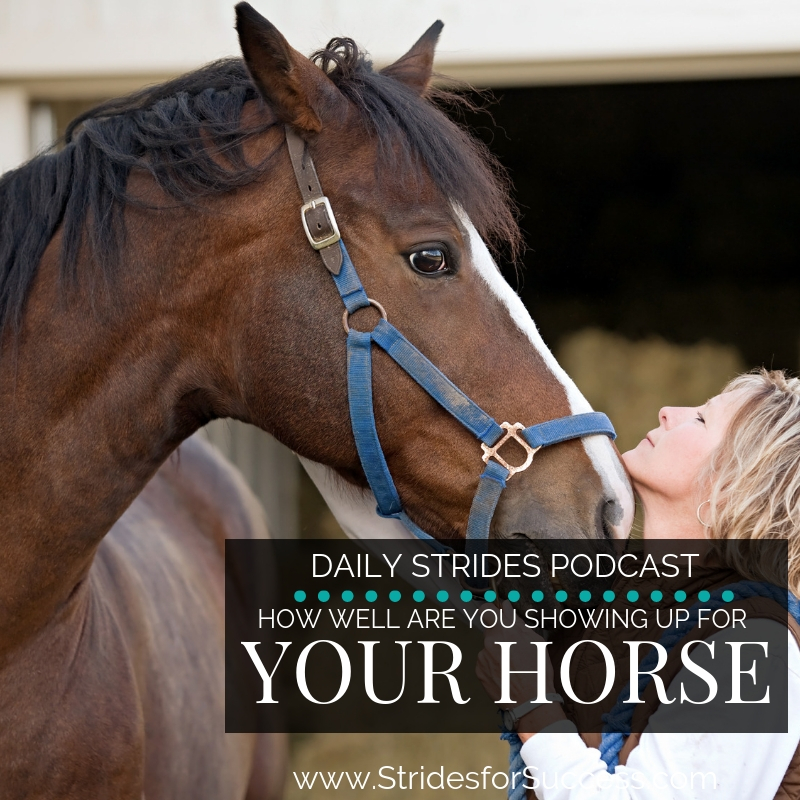
  • How Are You Showing Up for Your Horse?

    How Are You Showing Up for Your Horse?

    How Are You Showing Up for Your Horse?

    What this episode is all about & how it can help you:-

    • To understand where the conversation begins
    • How you can influence each ride before you get into the saddle
    • Start thinking about creating different rhythms for different routines
    • Begin ‘checking yourself at the gate’!

    [smart_track_player url=”https://op3.dev/e/traffic.libsyn.com/dailystridespodcast/1074-How-Are-You-Showing-Up-for-Your-Horse.mp3″ title=”How Are You Showing Up for Your Horse?” social_linkedin=”true” social_pinterest=”true” social_email=”true” tweet_text=”Horse riding begins long before you get into the saddle. How are you showing up for each ride? Daily Strides Podcast episode” hashtag=”equestrian” twitter_username=”strides_success” ]

    Have you also noticed how, with people we are familiar with, we don’t always show up as the best version of ourselves?  I find that this happens a lot in relationships between riders and their horses as well…  And it can have such an impact on the overall ride.

    In this episode of the Daily Strides Podcast I want to remind you of how it is your responsibility as a rider to try to show up as the best version of yourself in the saddle.  As I write this, we are in the final weeks of the year and so many riders are making plans for the new year ahead.  This will definitely be a filter to put all those plans through. 

    However, I hope that regardless of when you are reading this, you take action on some of the things which will help you show up as the best version of yourself for both your horse and you.

    Realising Where the Conversation Really Begins

    So many riders think of the conversation beginning when their bum touches down in the saddle.  However, I want to try and get you thinking about how the conversation actually begins long before this happens.

    I believe the conversation between you and your horse begins when you are both aware of each others presence.  Showing up begins at that point.  The point of awareness. 

    Your Horse Should Not Be Your Personal ‘Pick Me Up’

    A habit that many riders find themselves slipping into is using their horse as a ‘pick me up’.  They are showing up, but rather than showing up as a team leader, they are showing up in order to make themselves feel better.

    Sure, your horse has the ability to improve your mood and make the world seem a better place.  However, that is a big expectation and responsibility.  It will also become a burden over time. 

    Think of how your day-to-day relationships work.  There is a give and take.  An ebb and flow.  It is important to understand that your relationship with your horse might be similar to this.

    Don’t take advantage of your horses inability to verbally express how they feel by continuously showing up in ‘bad form’.  Show up as the sort of person you would be if you were greeting someone you respect and love.

    Positively Influencing the Ride Before Getting into the Saddle

    Being aware and conscious of how you are showing up will help you to start the conversation off on the right footing.  We hear a lot about rhythm and its importance in riding.  It is one of the most foundational pieces when training horses and riders.

    You have the ability to help ‘set’ the rhythm for each ride when you are aware of how you are showing up for your horse before each ride.

    Different Rhythms for Different Routines

    Setting the rhythm is a little like setting the tone of the conversation.  It is going to be relaxing or is there more energy needed?  Are you going to approach each action with a sense of upbeat energy, or are you going to carefully cultivate a feeling of peace and safety?

    Both situations are needed on a regular basis, so learning to check yourself before showing up will help you overall in your riding. 

    Setting an intention for each interaction and, therefore, rhythm for the overall conversation will help you to focus both on the ground and in the saddle.

    Showing Up Regardless of the Situation

    Practice trying out different routines and ways of doing things and see what suits your horse and yourself best.  Different situations will call for different tones.  Learning what works where will come in useful both at home and if you are travelling.

    A familiar rhythm and routine will often help calm nerves, for both your horse and yourself, at a new or unfamiliar place.  

    It will also help to focus you both as you know what is coming and therefore feel more confident about it.  This is showing up as a team leader.

    Showing Up for Yourself As Well

    As riders, we want to transition into the role of becoming the team leader for both ourselves and our horse.  When you are showing up as the best version of yourself in a given situation, you are doing so for all involved; you and your horse.

    Constantly arriving at the yard feeling tired, moaning or without any real consistency in what you are doing will soon negatively impact your relationship with your horse.

    This will also, overtime, wear down your confidence in your own abilities. 

    Showing up feeling negative will not inspire either yourself or your horse.  However, no one will show up feeling great all the time.  We have emotions and are ‘lucky’ enough to experience a whole range of them on a daily basis!

    Different Expectations for Different Situations

    On those days where you are feeling less than inspired, try to turn the situation around.  What could you do, in the present situation or ‘mood’ that would be closer to how you would ideally like to show up?

    A little change to how we are thinking about something is often the catalyst needed to ‘self coach’ ourselves back into better form. 

    Begin Checking Yourself at the Gate

    It is so important to understand, realise and recognise that you have so much sway over how the conversation with your horse will go each interaction.  It just comes down to becoming intentional about how you are showing up.

    You can always ask yourself ‘what can I do right now to positively improve this situation’.  Keep in mind that answer is often a mental one.  Remember that horses align with their riders. 

    Becoming aware of how you are showing up and the influence this is having on your overall relationship with your horse has the potential to make all the difference in your relationship.

    Happy Riding

    Lorna

    I am hosting a free live online training on “The 6 Basics to Focus On in Your Riding” and I would love for you to join me there…  If you’re interested, you can register for your seat by CLICKING HERE

    CLICK HERE to save your seat in the free live online training

    Other Posts and Episodes that Relate to This Topic:-