Tag: massage

  • 4 Ways to Work Your Horse When Time is Short…

    4 Ways to Work Your Horse When Time is Short…

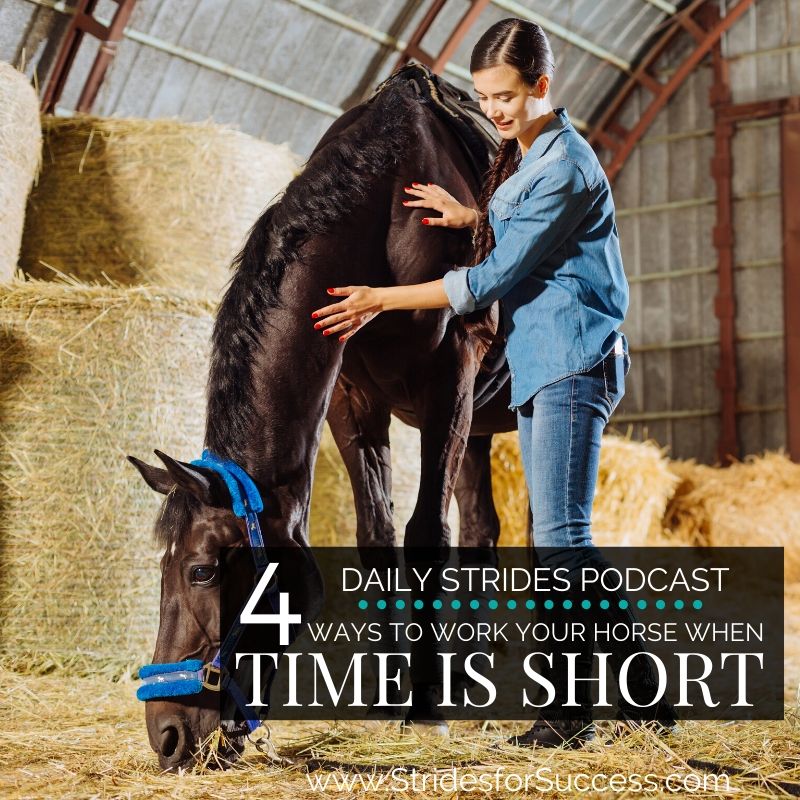
    4 Ways to Work your horse when time is short

    As I write this, it is that time of the year. The clocks have just gone back here in Ireland. It is dark by 5:30 pm each evening. It is still dark at 7:45 am each morning… And we have close to two months left until the official shortest day of the year. Meaning things are only going to get darker between now and then.

    [smart_track_player url=”http://traffic.libsyn.com/dailystridespodcast/1120-4-Ways-to-Work-Your-Horse-when-Youre-Short-on-Time.mp3″ title=”4 Ways to Work Your Horse when You’re Short on Time” social_linkedin=”true” social_pinterest=”true” social_email=”true” tweet_text=”Struggling to fit riding into your winter months? Here’s 4 ways to make it happen for you and your horse…” hashtag=”equestrian #podcast” twitter_username=”strides_success” ]

    In the top half of the world, Winter has come! And with it, a complete lack of daylight, warmth and ‘perfect riding weather’. This means that riders have to begin changing their approach slightly if they are to still keep moving forward with their riding.

    Couple this with upcoming holidays and the Christmas season, flexibility is the name of the game for riders this time of year.

    So how do you keep your riding moving forwards when your riding times are shorter? And when your actual number of days in the saddle each week possibly changing week on week? Taking a different approach is the answer. I am going to give you 4 different options you can use to work with your horse, that take either lack of time or bad weather into account…

    1 . Lunging

    I personally believe that every rider in the world can benefit from learning to lunge correctly and well. It is something that is so easy to get started with. And, even better, your riding skills do not have a whole lot of sway over your lunging skills.

    Meaning you don’t have to be a ‘great’ rider in order to have a huge positive impact with lunging.

    This is a topic that we have covered many times here on the podcast and I am going to give you links to all the relevant episodes and resources I have created for you.

    2 . Groundwork

    The true bookends to every ride you will ever have. Groundwork is worth investing time into improving as it is something you do every single time you interact with your horse. It is also great for when the weather is less than ideal for riding. When you are confined to a smaller space, even if that space is a stable or barn.

    I am going to suggest starting with something you do every time you’re in the saddle; halt.

    The quality of your halt can be dramatically improved before you ever get into the saddle. Work on the pressure and release concept on the ground. This then allows you to refine something that is the foundation of how you apply your aids in the saddle.

    I have spoken about groundwork a lot in previous episodes. Here are the links to those episodes and other resources I have created for you about groundwork.

    3 . Massage or Desensitising

    Wet, cold weather often makes us want to settle in. Get nice and cozy and leave the weather outside! Well, you can do this with your horse as well, kind of! Massage is a great way to really bond or connect with your horse. It helps to build trust in your relationship with each other.

    Massage is also a great way of using rhythm as you prepare to ride to improve the ride itself.

    It promotes relaxation. You get to really learn what every inch of your horse’s body feels like. And, your horse gets to do something with you that doesn’t require any effort from him. He truly gets to enjoy the interaction between the two of you with little to no demands on him.

    Here are some resources I have created to help you get started with this.

    4 . Long Lining or Long Reining

    This one is probably the most challenging to get started with if you have never done it before. The reason is that two lunge lines double the chances of you becoming knotted up! However, I also feel that if you are confident on the lunge with your horse, you can potentially begin looking at long reining or long lining your horse.

    Long lining is great as you see things from a completely different perspective. It allows you to really see if there are issues with straightness, over or underdevelopment and suppleness.

    The other great thing about long lining is that you don’t need a huge amount of space. And, assuming you’re not into running, it is all done from a walk. This cuts down on the chances of having a slip in wet weather and heavy impact on legs in dry, hot weather.

    Again, you can find a ‘getting started’ guide for long lining at this link:-

    Lack of Time can be an Opportunity

    The change in season and scheduled does not have to spell the end to work with your horse. It is simply a matter of becoming a little more strategic with regard to what you are doing in the yard. Use this as an opportunity to try something you have not tried before.

    Remember, a change is often as good as a rest when it comes to routine. It is up to you to make that happen.

    Happy Riding
    Lorna

    CLICK HERE TO BEGIN SUCCESSFUL LUNGING OF YOUR HORSE TODAY

    Resources to help you with your riding journey:-

    For more information visit the links below

  • Communicate with Your Horse through Groundwork – Part 1 Touch

    Communicate with Your Horse through Groundwork – Part 1 Touch

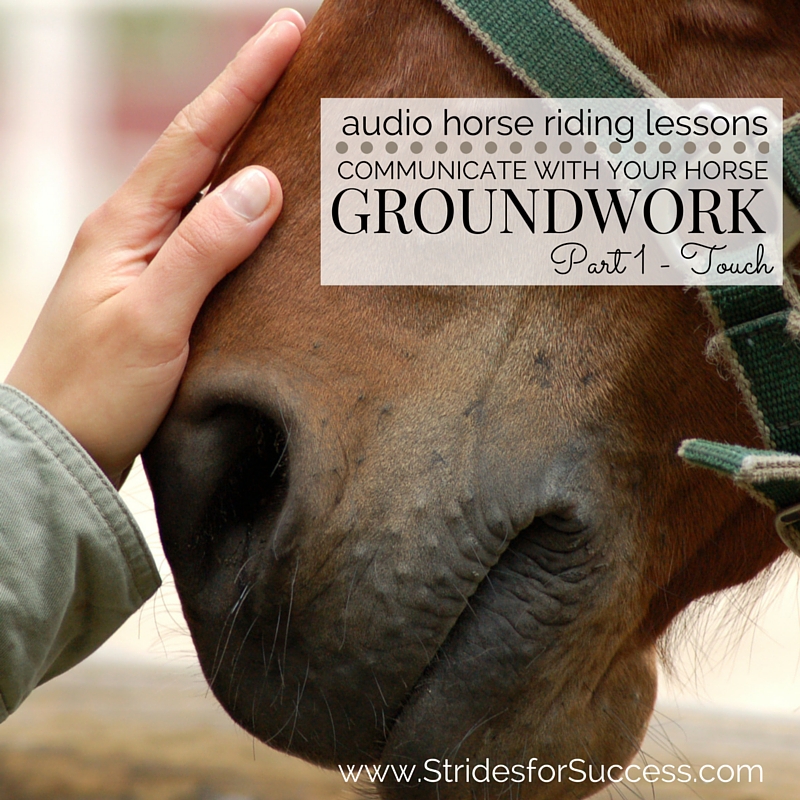
    Communicate with your horse through touch - Groundwork part 1

    How much time do you spend strengthening your relationship with your horse while on the ground?  Many riders only think in terms of ‘riding’ when they think of communicating with their horse.  However there are many other ways you can begin to not only create a stronger sense of trust but also to improve your horse’s overall training.

    [smart_track_player url=”https://op3.dev/e/traffic.libsyn.com/dailystridespodcast/641-Using-Groundwork-When-Training-Your-Horse-Part-1-Touch.mp3″ title=”Groundwork Part 1 – Touch” social_linkedin=”true” social_pinterest=”true” social_email=”true” tweet_text=”Groundwork and how it can help your riding” hashtag=”horses #equestrian #makeeveryridegreat” twitter_username=”strides_success” ]

    Groundwork is really exactly what it sounds like.  It is working with your horse while being on the ground, rather than in the saddle.  Unfortunately many riders see this work as being a means to an end while starting or backing young horses.  This is completely untrue.

    In fact, groundwork is something that can help develop your overall conversation with your horse, regardless of where you are in your training or development.

    Groundwork can be beneficial at any point in your horse’s life.  From a young, unstarted and nervous 2-year-old, to an older 20 plus senior

    How ‘Good’ Groundwork Can Help You & Your Horse

    The benefits of working with your horse on the ground are far-reaching for both horse and rider.  It helps to build trust and to establish certain ‘personal space’.  This helps to build respect for you as your horse’s leader.

    Working with your horse from the ground allows you to get to know what is ‘normal’ for your horse, both emotionally and physically.  Groundwork will also help to begin desensitising your horse.

    Groundwork allows you to being instilling basic training principles that can be transferred across to training while in the saddle later

    From a health perspective, different types of groundwork can help promote circulation, loosen or relax stiff or tense muscles.  It also allows your horse to become familiar with you touching more sensitive areas of his body without fear or apprehension.

    Using Groundwork To Compliment Your Riding

    I really feel that we are constantly communicating with our horses, not just when our bums touch down in the saddle.  Groundwork is a great way of keeping the conversation, and often training, moving forward when riding is not possible.

    This can be for any number of reasons; time constraints, injury, weather or just to add something different to your horse’s training plan or schedule.

    Groundwork can be used to either explain principles that you will or are using in the saddle. Correct groundwork will also strengthen your aids and overall communication when you are riding.

    In fact, I am a huge believer of using the necessary ‘groundwork’ that happens before rides to help relax and set the tone of the overall conversation for the ride.

    Using ‘Touch’ to Work with Your Horse

    In this particular blog post I want to focus on groundwork relating to touch.  More specifically, how you can begin incorporating massage, stroking and basic touch techniques into your training with your horse that will be enjoyable and educational for both of you.

    So, before we go any further, it is important to note that in order to work with your horse, you will need to be in a safe and suitable environment.  Very often when your horse is being massaged, he might become so relaxed that any sudden or different movements or noise can cause an unexpected reaction from him.  This could potentially lead to accidents.  It is also important to wear your helmet at all times when working near or around your horse.  Once you have chosen a suitable location you can then begin working with your horse.

    It may sound a little strange, but the attitude and energy you approach your horse with can play a big part in how your horse reacts to you and your touch.  Keep your mind calm.  Free of stress and, just like when you ride, try to remain focused on the task at hand throughout the groundwork session.

    Being relaxed and feeling confident and present is vitally important to the success of your work, whether it be on the ground or in the saddle, with your horse

    Respecting Boundaries and Personal Space

    Do you, like many riders, only think of boundaries and respect from your own point of view? We need to also give our horses the option of saying ‘no’ if they feel uncomfortable.

    Obviously the types of touches or work you can do with your horse will depend on the relationship you have with your horse.  Nervous or anxious horses should be approached in a sensitive manner and only touched where they allow you to.

    The aim is to build trust, so forcing any particular connection or touching of a certain area will only serve to damage that fragile relationship, not strengthen it.

    Your horse will let you know what he is happy with.  Look for signals from him such as yawning or licking and chewing.  This generally occurs when your horse is feeling relaxed and enjoying the proceedings.  Pinning their ears, lots of anxious, tense movements or lifting the head or tail higher will rather tell you to leave well enough alone.

    Staying Inside of the ‘Comfort Zone’

    At any point if your horse becomes uncomfortable with what you are doing, go back to a place where they are happy and rather work there for a while.  It may take a few sessions before you have built up enough trust to move on from there.   Also keep in mind that, just like us, there may be days that your horse just does not want to be massaged or touched!

    There are many different ways you can use your hands that will promote a different feeling in your horse’s body.  Again, the key is finding what your horse is comfortable with initially and then working on from there.  

    I suggest beginning with just stroking the neck, shoulder and back area where the saddle would sit. Use your whole palms and fingers and rub in the direction the hair lies naturally

    One of the easiest ways to promote a bond is to always have one hand on your horse.  You can do this by making sure the hand finishing the one stroke remains on your horse until your other hand begins the next stroke.

    Pay Attention to the Pressure You’re Applying

    Think about the pressure you are applying as well.  Start each stroke with a soft pressure and build to where you want.  Then finishing the stroke with a similar pressure to where you began.

    Very often the amount of pressure will depend on your horse and the area you are working on, but most often horses enjoy  something around what you would apply when using a rubber curry comb or similar.

    Too soft and it may tickle or annoy your horse, too hard and your horse may find it uncomfortable or even a little sore.

    Experiment with What Works for Your Horse

    Once you have worked over the neck, shoulder and back area like this, you can begin experimenting with using your hands in different ways.   One such way is using your hand to move the skin in small circles on a particular area.  Simply lay your hand on your horse’s coat and, applying a little more pressure with the sides of your palm and fingers, begin moving your hand in a small slow circle.  Your hand will not move from the area, rather just move the skin around over the muscle underneath in that specific area.

    Again, while you are doing this with your one hand, keep your other hand on your horse to help promote that feeling of connection between you

    Finally, you can also begin to loosen out the neck and crest area by gently squeezing there with your hands.  Just like it feels good for you to have your hair slightly and gently tugged or squeezed, it also is an enjoyable feeling for your horse.  Start at the withers and work up towards the poll.  Only go as far as your horse is comfortable with and then begin working your way back towards the withers again.

    Keep in mind that even though your horse might not enjoy you working near his ears or head initially, consistent calm work like this will encourage him to trust you.  This will eventually lead to him allowing you to work around his head and ears in a safe manner

    Touch Is Just One Element of Groundwork

    Groundwork is a big topic.  There are so many different ways you can begin using this both in the stable and the arena. In the next blog post, which you can find HERE, I discuss the concept of pressure and release.  This is a foundational principle to you successfully working with your horse on the ground, and in the saddle.

    Taking the time to truly connect and work with your horse through groundwork will add a whole new dimension to both your training and your relationship with each other.  I suggest starting today with your horse and see where it leads you both.

    Happy Riding
    Lorna

    Save Your Seat for the Upcoming Live Online Training HERE

    CLICK HERE to save your seat for the upcoming free live training on groundwork

    If you are interested in learning more about incorporating touch into your groundwork training with your horse, we have created a full series of audio trainings, inside of Daily Strides Premium, that you can listen to which will help you begin building a routine with your horse.

    There is also a full workbook to go along with the audio trainings.  This includes the different types of movements you can use when working with your horse. Visit https://stridesforsuccess.com/join/ for all the details.