Tag: pressure and release

  • 3 Groundwork Exercises to Train Your Horse

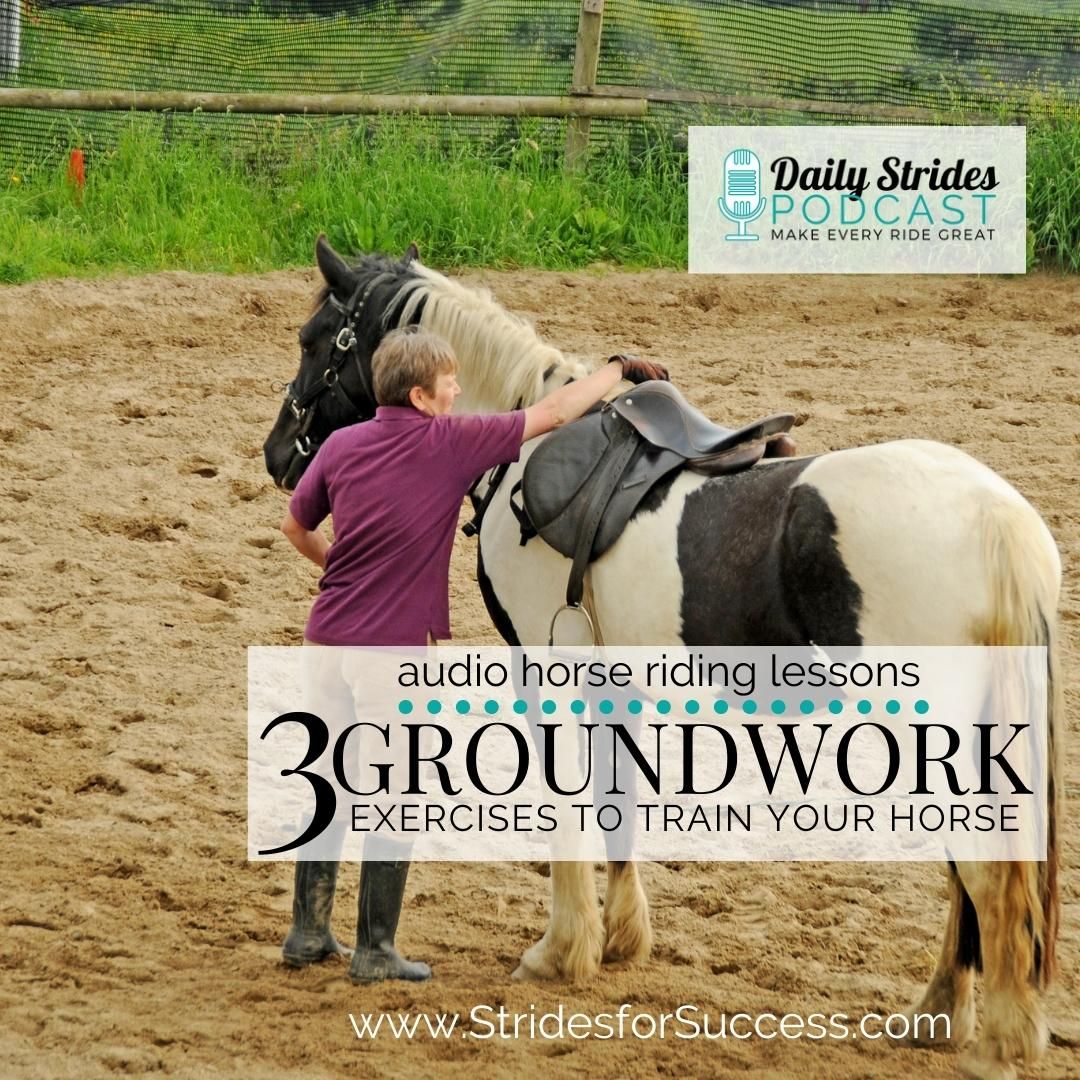
    3 Groundwork Exercises to Train Your Horse

    [fusebox_track_player url=”https://op3.dev/e/traffic.libsyn.com/dailystridespodcast/1262_3_Groundwork_Exercises_for_Your_Horse.mp3″ title=”3 Groundwork Exercises to Work on With Your Horse” social_linkedin=”true” social_pinterest=”true” social_email=”true” tweet_text=”3 different training exercises for horses – with rider on the ground” hashtag=”horsepodcast” twitter_username=”strides_success” ]

    Just last week, I noticed a rider literally dragging their horse from the stables towards the arena. The rider was about a meter in front of the horse’s head. Her face was red with effort! And her horse was literally going nowhere slowly. It occurred to me that so many riders make things really difficult for themselves by not having a few ground rules in place when it comes to their horse and their expectations.

    And what better place to work on ground rules than on the ground? Beside your horse. Groundwork is an essential part of training your horse. It is where you can set expectations, create boundaries, explain ‘rules’, and develop partnerships.

    Groundwork exercises also help you to refine your own skills as a rider. By simply having to figure out a slightly different way to ‘say’ something to your horse, you get to explore your own knowledge of the subject.

    So, all of that being said, here are 3 groundwork exercises you can use this week when working with your horse…

    Groundwork Exercise 1 – Backing Up

    Going backward when asked is something that can benefit all horses and their riders! When you can ask your horse to reverse, it makes doing some of the daily activities so much easier when you ride. It also gives you more flexibility and options when it comes to moving your horse.

    Backing up in a straight line will also work your horse physically and mentally. The key word is straight… 

    By working on improving this on the ground, and then later practicing while in the saddle, your horse will develop both sides of his body.  By remaining straight, the symmetry will ensure equal development.

    FREE Groundwork Exercise to Promote Suppleness

    Groundwork Exercise 2 – Flexion

    Flexion is one of those things that, as you and your horse begin to go deeper into training, will become very important.  It is also something that you can begin encouraging while on the ground. And this will, again, have a positive impact when you are in the saddle.

    Flexion is often the key to transforming the work you and your horse are doing together. When you begin paying attention to correct flexion, it leads to an increased softness… 

    It is also important to remember to work both sides with your horse. Again, that all-important symmetry that is necessary to develop, stretch, and work your horse equally. Focus on the flexion of the head and neck initially. Keep in mind that any ‘movement’ in the right direction should be rewarded :)

    FREE Groundwork Exercise to Promote Suppleness

    Groundwork Exercise 3 – Pressure & Release

    Applying pressure is how we ask questions and communicate what we want to our horses.  We can use so many different aids, singularly or in combination, to apply pressure. Even your voice can apply pressure.  However, pressure in and of itself is not enough.

    In order for our horse to understand what we want, we must let him know when he does the thing we want after we ask. This is the release. Apply pressure to ask the question. Release pressure to say ‘affirm’ the response.

    There are lots of groundwork exercises you can do that focus on this topic.  One of my personal favorites is turn on the forehand.  And, in both asking and working through each turn on the forehand, your horse also gets to put some of the flexion work to good use.

    A Step-by-Step Groundwork Exercise

    If you are keen to find out how you can begin using the “Increasing Suppleness Through Flexion Groundwork Exercise” to develop and train your horse today. Get the free guided audio training to use before or after your ride, to really begin introducing and increasing your horse’s flexion.  And you will also get a bonus audio horse riding lesson as well to use when in the saddle to ask put some of your work into practice while riding.

    The”Increasing Suppleness Through Flexion Groundwork Exercise” to develop and train your horse is 100% free and you can get yours when you CLICK HERE

    Happy Riding
    Lorna

    FREE Groundwork Exercise to Promote Suppleness

    Additional Links on Groundwork

    Other Resources to Help Riders

  • Using Artificial Aids when Working With Horses

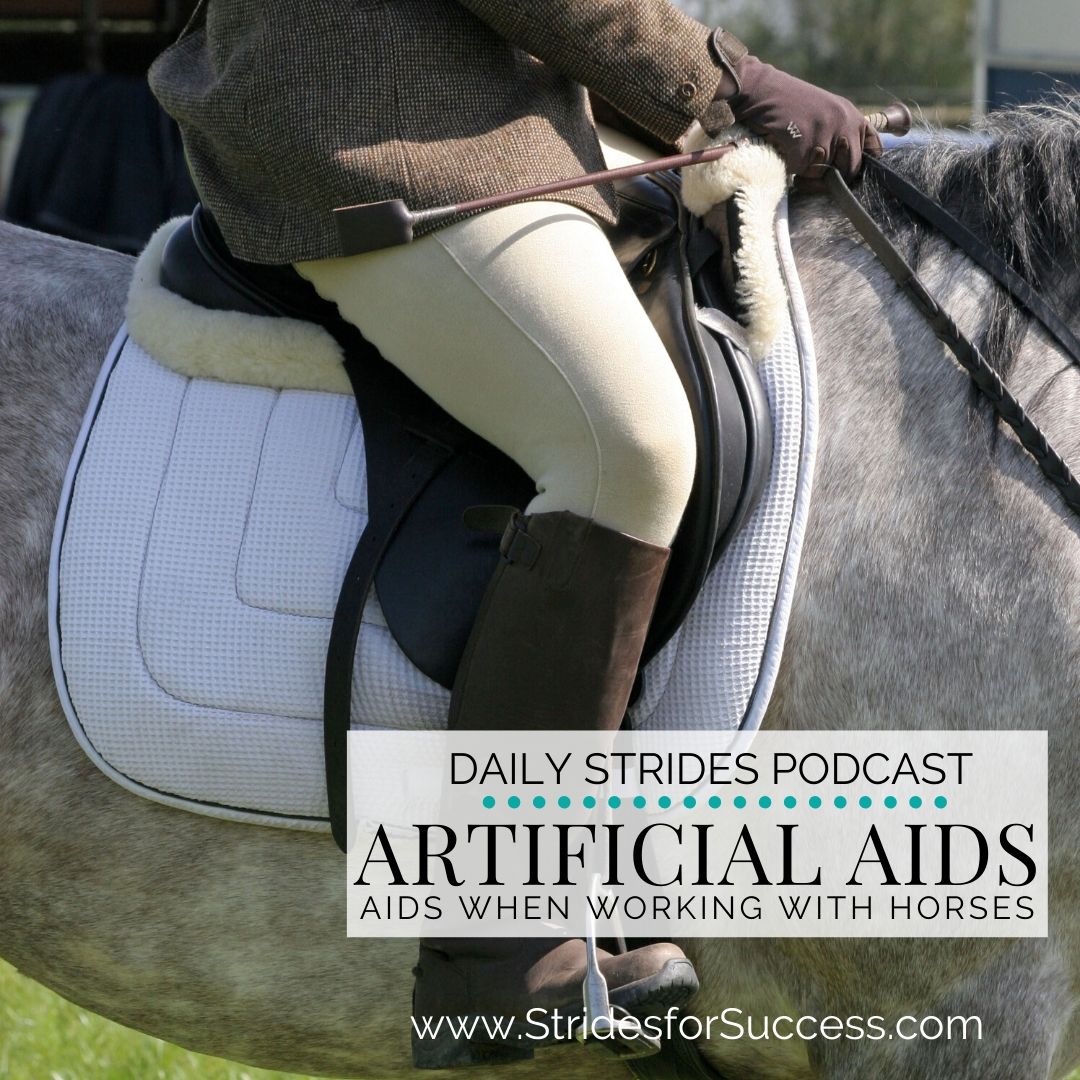
    Using Artificial Aids when Working With Horses

    Using Artificial Aids when Working With Horses
    For some reason, many riders have a negative story around artificial aids. And yet, most riders use artificial ads on a daily basis, whether riding or on the ground with their hose.
    What is important to remember is that artificial aids are neither positive nor negative.  
    They just are what they are.  And you can use them to create a positive or negative reinforcement with your horse.  And, let’s be honest here, you as well.
    So in light of all that, I want you to begin being a little more mindful when using artificial aids with your horse.  This will allow you to begin the process of figuring out when and how you can begin moving away from that aid and towards a more natural aid instead.

    Why Artificial Aids?

    Artificial aids help enforce boundaries.  And boundaries are vital for both horse and rider. They help us to clearly communicate what we want and also allow our horses to clearly communicate back to us.  Having no boundaries results in nobody really understanding what is expected of them.
    Clear Boundaries = Clear Expectations
    Many of your boundaries can be communicated and enforced using your natural aids.  Your own voice, hands, legs seat, position, etc.  However, there are times where an artificial aid is actually more helpful and less confusing for both horse and rider.  A railing or fence around the arena for example.
    I believe that the key to successfully using artificial aids is to realize that they are there to simply ‘back up’ or reinforce your natural aids.
    They are not used on their own.  Similarly, they should not be the lead in the conversation with your horse.  However, they are a powerful tool, when used correctly, to clarify what you want to your horse.

    What are Artificial Aids?

    Simply put, it is something you can use that is not part of your body, to help explain or clarify something to your horse.  Think of them as tools.  You can pick them up and put them down when you want.  Now, what is important to realize is that not all artificial aids can actually be ‘picked up’!
            • Bridle
            • Bit
            • Headcollar
            • Leadrope
            • Lunge line
            • Whip
            • Spurs
            • Arena wall
            • Stable wall
            • Groundpoles
    All of the above are artificial aids.  They are not part of your body, and yet they help you to more effectively communicate with your horse.  This is especially true when your natural aids are being ignored or ‘missed’ by your horse.

    When to Use Artificial Aids

    Most riders will use some form of artificial aids from day 1 of their experience when working with horses. And most horses will see the aids as an extension of the rider and a part of the overall conversation.  Artificial aids work just like your natural aids, in that it is all about pressure and release.
    You can apply pressure using artificial aids and then release it when your horse responds
    The amount of pressure is where many riders can have a negative narrative surrounding using artificial aids in their day to day riding with their horse.
    However, like any aid, natural or artificial, excessive pressure comes down to the rider and how mindful they are when applying the aid.
    Let’s take one of the more misunderstood artificial aid, the whip.  I think that this is simply a case of something having the wrong name!  If we referred to it as a ‘pointer’ or even a simple ‘stick’, would it have as much negativity attached to it?  Either way, it has and because of this many riders refuse to ride with one.
    But, is bruising your horse’s sides because you have to kick so hard any better than whipping your horse?  Neither is right – and yet one is seen as being acceptable by many riders.  This is something I take issue with.  I personally feel that a ‘reminder’ or ‘pointer’ to pay attention to the rider’s leg is a lot nicer than kicking the sides off a horse… What do you think?

    Consistency and Responsiveness

    More often than not, artificial aids are simply there to ‘back up’ your natural aids.  However, consistently is first required from the rider with regards to what they are doing at any given time.  I believe that most responsiveness issues can be traced back to a rider who is ‘wishy-washy’.
    If you are to use artificial aids to back up your natural aids, you must get clear on what you are doing and why.
    So, let’s go to the whip again.  It is important to first of all set things up.  We usually use the half halt to do this.  The half-halt is simply a way of bringing your horse’s attention to you and what you are doing in the saddle.
    Once your horse is listening, you then decide where your aid will be applied and how much pressure is required.  Then the aid must also be applied at the best time for your horse to take action and respond.
    What many riders find is that, even if all of the above are consistently being communicated, their horse either misunderstands or ignores their leg aid.  This is when I feel a schooling whip can add to the conversation.  If used correctly, it simply brings the horse’s attention to the missed or ignored leg aid.  A simple tap.  Not a whip, lash, or strike.  Just a simple tap, directly behind the leg aid, delivered immediately after the leg aid has been ignored.

    Weaning Your Horse Off Artificial Aids

    How long you want to continue to include artificial aids in your conversation with your horse will depend on your unique circumstances.  Some riders feel the need to have a way to bring their horse’s focus and attention back to them immediately.  Maybe while navigating a track of fences.  Other riders want to move away from anything that is not as natural as quickly as possible.  Artificial aids, when used correctly, are not wrong.  They just are.
    Often, if you begin to move away from them, both you and your horse must learn to trust and develop more confidence in yourselves and each other.
    Take the boundary fence of the arena.  If used consistently to help keep you both ‘straight’ when riding on the outside track, it will become a crutch.  In fact, it will actually begin to negatively impact your development and training over time.  But moving away from it requires confidence and trust.
    It requires developing mentally, emotionally, and physically.
    The same goes for the fence of the lunging arena.  Or the arena fence full stop.  On the ground, this can be the difference between begin able to tack up in a stable or out in the open.

    Building Your Natural Aids

    Again, artificial aids are neither good nor bad.  How you use and apply them makes them so.  But what is important is that you are always looking to developing yourself as a rider.  Develop your natural aids.  Your seat and weight aids.  Voice is another important one.  And, of course, legs, hands, body language and position.
    Your most powerful aid, either in or out of the saddle, is your thoughts.  You can use your artificial aids to clarify and improve your thoughts.  doing this will, over time, improve your other natural aids as well.
    Start with setting your boundaries.  Get clear on what you want and your expectations surrounding everything in your riding.  Then look at how you communicate and enforce this with your horse.
    There is always a balance of aids at play in your conversation and it will evolve and change over time…
    Happy Riding
    Lorna

    Additional Resources on This Topic

  • Communicate with Your Horse Through Groundwork – Part 2 Pressure & Release

    Communicate with Your Horse Through Groundwork – Part 2 Pressure & Release

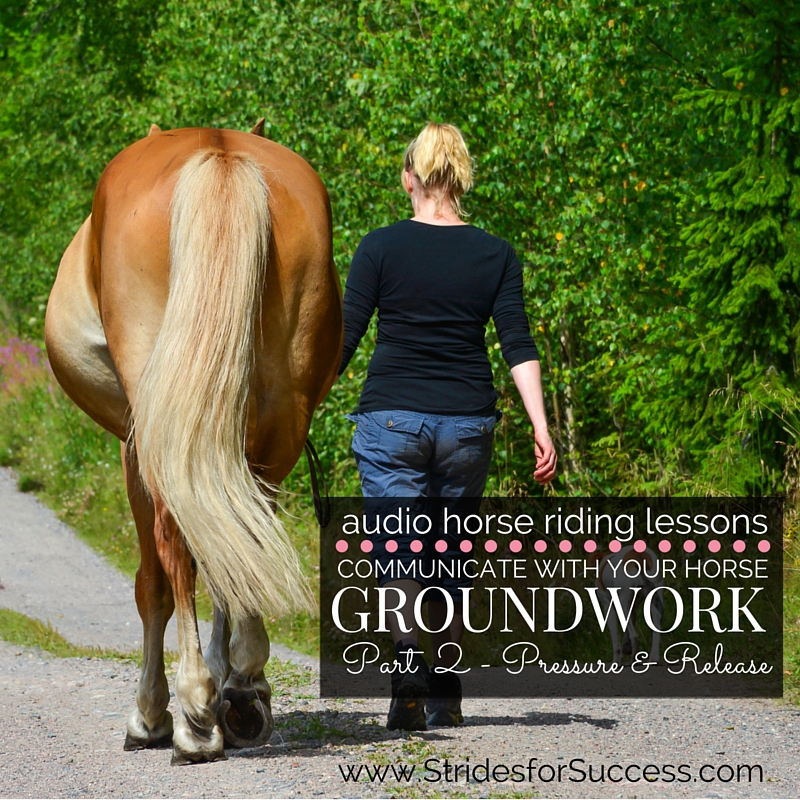
    Groundwork, when referring to horses, simply means working with your horse from the ground in order to train and increase communication skills.  In this blog post we are going to focus on ‘Pressure and Release’ and how you can begin to correctly and fully understand the concept in order to further your horse’s training from the ground.

    This is part 2 of a full series dedicated to Groundwork from Strides for Success. Part 1 which explains the basics and then moves into specifically dealing with ‘Touch’ can be found HERE >>

    [smart_track_player url=”https://op3.dev/e/traffic.libsyn.com/dailystridespodcast/671-Using-Groundwork-when-Training-Your-Horse-Part-2-Pressure-and-Release.mp3″ title=”Groundwork Part 2 – Pressure and Release” social_linkedin=”true” social_pinterest=”true” social_email=”true” tweet_text=”Groundwork and how it can help you teach your horse about pressure and release” hashtag=”horse #horseriding” twitter_username=”strides_success” ]

    When we are in the saddle, most riders and trainers will use the concept of pressure and release to communicate with the horse, from the saddle, what they want the horse to do.  Pressure and release is viewed as ‘negative reinforcement’ in that when you apply the pressure, you are placing the horse in a somewhat uncomfortable situation.  However as soon as the horse makes a move towards the direction you desire, you reward him by removing the discomfort; or pressure.  This is the release part of the work.

    What is important to note however is the word ‘discomfort’ and how we view applying this to the horse in any given situation.  I personally do not believe that the level of pressure being applied must be painful for the horse.  Think of discomfort as being literally a hoof step out of the horse’s current ‘comfort zone’.  By gradually, over time, increasing the comfort zone, you can train your horse using the pressure and release concept, without ever raising their anxiety levels.

    Raising your horse’s anxiety levels, regardless of the situation, rarely will produce a positive outcome.  I have found that the pressure works best when it asks the horse to think a little differently and when it is applied by a person they have learned to trust.  If you apply pressure to the point where it causes pain, that trust will be eroded – and we all know how difficult it is to rebuild trust when broken.

    This brings us to the other all important aspects that makes the ‘pressure and release’ way of training work; timing and amounts of pressure applied.  Having worked with riders who are literally just beginning their journey into the world of horses, these are often the most difficult parts of teaching this way of working with horses.

    The challenge seems to lie in the fact that every situation is different, regardless of the horse or the circumstances.  Factors such as the weather, the time of day or even just how the sun is creating shadows  can lead to having to adjust the approach and the technique used.  It is learning how to assess this and then proceed confidently that trips many riders up

    I used the word confidently there on purpose; another factor that dictates a successful outcome when using the pressure and release system when training is the mindset of the rider, both before, during and after the groundwork or riding session with the horse.   If you want your horse to become comfortable ‘stretching’ his comfort zone, you must be comfortable and certain of how you ask and the consequences of asking that question.

    Any hesitation on your part will be seen as uncertainty to the horse, and quite frankly, would you trust someone who seemed a little ‘iffy’ about something?  I didn’t think so!  Therefore, don’t expect the horse to do so either.

    Groundwork Part 2 - Pressure and Release

    So taking all this into account, how can you being incorporating pressure and release into your groundwork sessions in a way that will positively benefit your horse later when under the saddle?

    Start slowly and have a plan for every action you take with your horse.  It sounds pretty simple, but you would be surprised how many riders launch into something with no idea of just how they want the outcome to look like or feel like…  Let’s take something simple like asking your horse to move over in the stable.  Firstly, do you want him to ‘pivot’ around his front end, or are you asking him to move his entire body over?  Secondly, how far over are you wanting him to move?  And finally, are you confident enough to remain in charge, even if things don’t go quite as planned?

    Now, bear in mind that the more you work with your horse, the more this will just become second nature; I rarely have to consciously ask myself these questions as I do this daily with horses.  But if it is either you or your horses first time, very often becoming clear on the desired outcome before you begin is the vital key to your success.

    So, assuming that you have indeed thought about all the above, you can begin to position yourself in the best possible place to make this happen.  Remain calm and confident as you move around your horse and realise that once you have committed, you will most likely have to remain in this ‘moment’ until he makes even the slightest move in the direction you desire.   I find that placing your hand on his body where your leg will be later if you were to ask a similar movement when riding is the best way to approach this.  However, you can also work with your horse moving away from the pressure regardless of where your hand is placed; hindquarters etc.

    The next consideration on your part is the amount of pressure applied.  This varies depending on so many factors; the horse itself, the area you are touching, the type of touch etc.  Start off with the smallest amount of pressure possible and then gradually build the amount you are exerting until your horse begins to respond.

    The response of the horse will dictate the ‘timing’ factor I spoke of earlier.  It is vitally important that in order for this to work, you must reward the horse for the slightest move towards what you are desiring.  The reward is the release of the pressure.  Now, depending on the horse and, again, the circumstances, you can release the pressure slightly and then increase again if you want him to move further over.  Or you can release the pressure all together however I personally don’t suggest taking your hand away as this will rather train the horse to ‘run away’ from pressure, rather than react to it.

    You can also verbally reward your horse, something I highly recommend incorporating into your everyday interactions with your horse.  I personally use a higher pitched tone when communicating a ‘reward’ to my horses, this way they understand what they did was correct and it is something that can later be transferred over to their training when being ridden under saddle.

    What you will find, if done correctly, is that when you consistently take the same approach each and every time, the amount of pressure you will have to use to enact the desired response will lessen.  This is what many riders call ‘lightness’, whether it be on the ground or in the saddle.

    The pressure and release training methods can be used in many different ways when working with your horse.  From asking them to move over in the stable, to asking them to walk forward.  It is one of the most successful ways of training horses when being ridden and it can even be used, without touching the horse at all.  This happens when you replace physical pressure with a more subtle ‘body language’ pressure.

    Regardless of how it is used, the concepts of understand what you want, noticing the amount of pressure, timing the pressure and the release and then being consistent and confident throughout is vital to this working with your horse.

    Happy Riding

    Lorna

    This is the first of a five audio programs, taking you step by step through applying these principles with your horse.  The other four programs can be downloaded to your phone and then listened to as you work with your horse, helping to ensure your success when applying this method of training.  You can visit www.stridesforsuccess.com/join/ for more details.

    As mentioned above, this is the second in a series of trainings on how to correctly apply groundwork techniques when working and training your horse.  The first in the series – Touch – and all following sections of this topic are all included inside of Daily Strides Premium.  If you would like to find out more about how you can access over 600 audio horse riding lessons, including the groundwork lessons, you can visit www.stridesforsuccess.com/join/